Top dressing lawns is a powerful landscaping technique that boosts turf health, improves soil quality, and enhances overall appearance. For large-scale operations, mastering this process can streamline workflows, reduce labor costs, and drive profitability. By pairing proven top dressing methods with innovative mechanized equipment—like the Mulch Mule trailer—landscaping businesses can complete more jobs per season, reduce manual labor, and deliver more consistent finishes across every property.
In this guide, you’ll learn how the top dressing process works, how to choose the right materials, how to prepare and apply at scale, and how to control costs while improving quality. You’ll also see where modern equipment fits in, so you can upgrade your operations and offer healthier, longer‑lasting turf to your clients.
Understanding Top Dressing for Lawns
Top dressing is the practice of applying a thin, even layer of material—such as compost, sand, or soil blends (loam)—over an existing lawn. Unlike full renovation, it works with the turf that’s already there, gradually improving the root zone without tearing out the grass.
At the soil level, top dressing can:
- Improve structure and fertility over time
- Help level minor low spots and surface irregularities
- Relieve issues related to thatch buildup and compaction
- Support better drainage on heavy or poorly performing soils
When the right material is used and applied correctly, it also boosts microbial activity in the soil, creating a healthier environment for roots. That leads to thicker, more resilient turf that holds moisture more effectively and stands up better to heat, traffic, and seasonal stress. By integrating into the upper layer of the lawn rather than sitting on top of it, a well-planned top dressing program steadily upgrades both new and established grass without disrupting use of the site.
Best Materials to Use for Top Dressing
The material you choose determines whether top dressing solves problems or creates more work later. Compost, sand, and soil blends (loam) each play a different role—building nutrients, improving drainage, or leveling the surface. Matching the material (or blend) to the site is key to getting predictable, high‑quality results.
Compost
Compost enriches the soil with organic matter and beneficial microbes, supporting deeper root systems and healthier growth. Using well-aged compost helps avoid introducing weed seeds or pathogens. Compost’s texture can vary, so selecting a blend that breaks down quickly and evenly can lead to a more consistent lawn surface.
Use mostly compost when:
- The lawn is thin, pale, or clearly nutrient‑poor.
- You need to build organic matter and boost soil biology.
- You’re trying to repair high‑traffic or stressed areas without a full renovation.
Sand
Sand improves drainage and helps level uneven surfaces, especially on heavy clay soils. It’s commonly used on golf courses and sports fields to create a smooth, firm playing surface. Over‑application, however, can dry out turf or create layering problems if not balanced with organic matter.
Use a sand‑dominant mix when:
- You’re working on heavy clay or poorly drained soils.
- Surface leveling and smoothing are top priorities (e.g., sports fields, golf fairways/tees).
- The existing turf already has adequate organic matter but struggles with standing water.
Soil Blends (Loam)
Loam is a mix of sand, silt, and clay that offers a balanced combination of drainage, water retention, and nutrient availability. The exact blend can be tailored to your site. A soil test helps you choose the right profile for your conditions.
Use a loam‑based blend when:
- You want balanced improvement in drainage, moisture retention, and nutrients.
- The soil is very sandy or very heavy and needs to be brought closer to the middle.
- You’re performing routine top dressing on generally healthy lawns to maintain performance.
Compost + Sand Blends
Blending compost and sand combines the drainage and leveling benefits of sand with the nutrient and organic matter boost from compost. This is often the most versatile choice across mixed portfolios of properties.
Use a compost + sand blend when:
- You need both better drainage and a noticeable boost in organic matter.
- You’re addressing compaction and minor leveling on compacted, low‑fertility sites.
- You want a versatile mix that performs consistently across multiple properties with varying conditions.
Dialing in the right material—or blend—up front reduces rework, improves turf response, and makes each top dressing pass more effective, especially when you’re operating at scale.
Step-by-Step: How to Top Dress a Lawn
Follow this process to get consistent, high‑quality results and avoid common mistakes, especially on larger properties. Plan your work for a window of moderate temperatures and light, predictable moisture so the material can settle without washing away or stressing the turf.
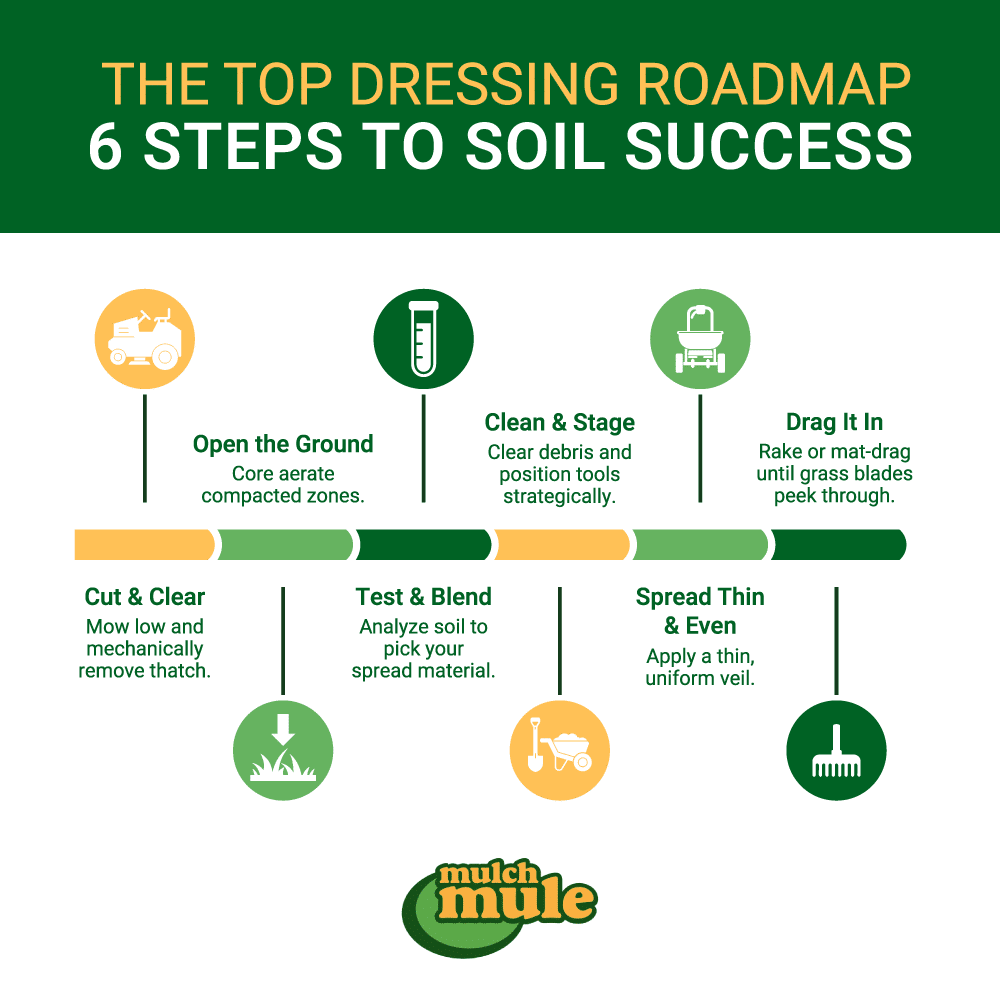
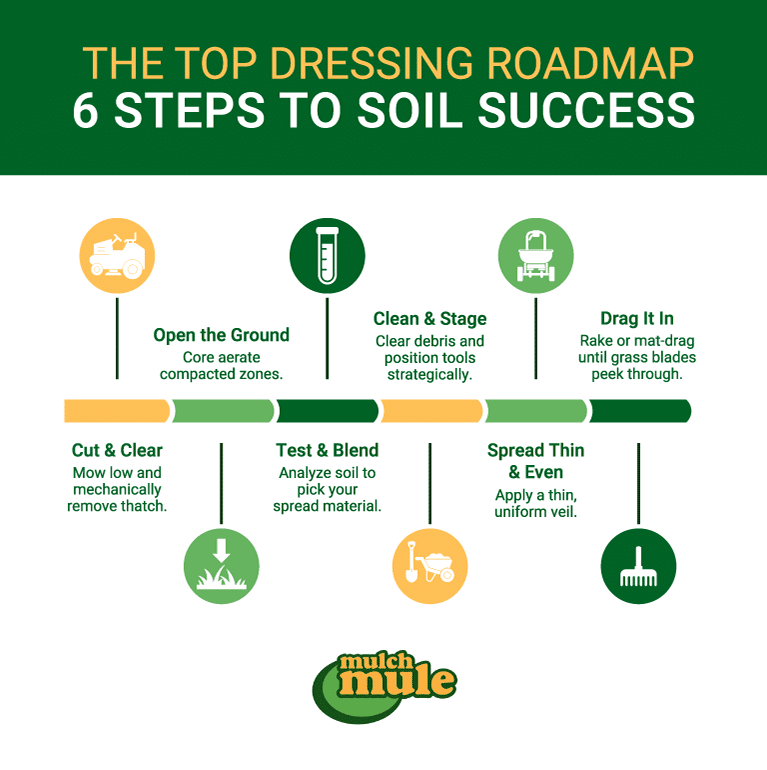
1. Mow the Lawn and Dethatch
- Mow slightly shorter than your usual height to expose more of the soil surface.
- Remove excessive thatch with a dethatching rake or machine so the top dressing can contact soil instead of sitting on a spongy layer.
2. Aerate to Relieve Compaction
- Core aerate compacted areas to improve air, water, and nutrient movement.
- Aeration before top dressing lets material fall into the cores, helping amend the soil profile rather than just coating the top.
3. Test the Soil and Choose Your Blend
- Run a soil test to identify pH, nutrient levels, and organic matter content.
- Use the results to decide whether you need more compost (nutrients/organic matter), sand (drainage/leveling), loam (balanced), or a tailored blend.
4. Clear Debris and Plan Logistics
- Remove leaves, sticks, stones, and any remaining clumps of grass so the surface is clean and smooth.
- For larger jobs, stage materials and equipment (e.g., trailers, spreaders, Mulch Mule) so crews can move efficiently without backtracking.
5. Apply Top Dressing in Thin, Even Layers
- Aim for a light layer—typically around 1/8″–1/4″—rather than a heavy blanket that can smother grass.
- Use manual tools for small areas or mechanized equipment for large sites to maintain a uniform depth.
6. Rake or Drag to Integrate the Material
- Lightly rake, drag, or brush the surface so the material settles into the canopy and contact with the soil is maximized.
- The goal is to see grass blades poking through, not buried.
Once the material is in place, monitor the forecast and use irrigation as needed to keep the lawn evenly moist while roots respond to the improved soil conditions.
Effective Methods for Top Dressing Lawns
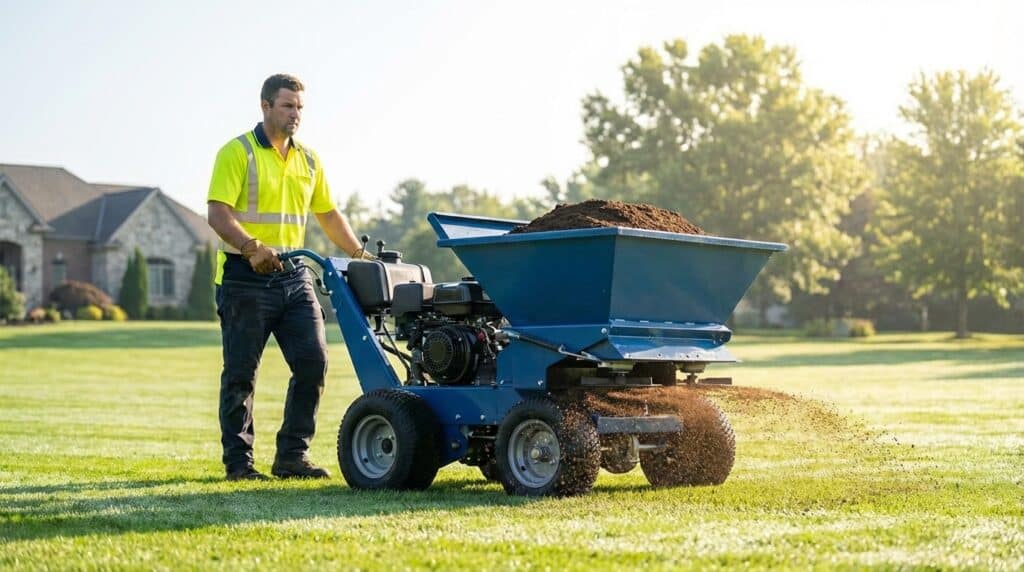
Selecting the right method is crucial for achieving a uniform finish. Depending on project scale, opt for manual or mechanized techniques.
Manual Techniques
For smaller areas, manual methods offer precise control:
- Shovel and Rake: Distribute top dressing and smooth the surface with a rake.
- Drop Spreaders: Provide controlled, even distribution over modest turf areas.
Though accurate, these techniques become time-consuming for large properties. Crews often need multiple passes to achieve a consistent layer, adding to labor costs and the total project timeline.
Mechanized Solutions for Large-Scale Jobs
For expansive plots or commercial applications, mechanized equipment improves efficiency:
- Material Spreaders: Attach to tractors for uniform distribution of mixtures over large fields.
- Bulk Material Hauler: Specialized units designed to handle bulk material while reducing labor demands.
Costs Associated with Top Dressing Lawns
Understanding the cost components helps allocate resources effectively for maximum return on investment.
Materials
High-quality composts, sand, or loam blends may cost more upfront but yield better long-term results and minimize future maintenance. Inferior materials might lead to uneven growth or require reapplication sooner.
Labor
Manual top dressing is labor-intensive, while mechanized solutions can reduce crew hours and overall labor expenses. Businesses often see savings from fewer on-site workers and faster project completion.
Equipment
While renting equipment can work for occasional needs, investing in versatile gear often pays off. Year-round, multi-purpose machines can reduce costs by covering various tasks—like debris hauling or mulching—as seasons change.
Project Preparation
Pre-application steps, including planning and soil testing, help avoid miscalculations and rework. A thorough approach can prevent issues such as insufficient material or the need for emergency labor to correct uneven spots.
Common Mistakes in Top Dressing (and How to Avoid Them)
Use this quick checklist to prevent rework, callbacks, and wasted material.
- Applying Too Much Material: Thick layers smother grass. Keep applications light (about 1/8″–1/4″) and make multiple passes if needed. Use controllable-flow equipment (e.g., live-floor trailers) to maintain depth.
- Skipping Soil Tests: Guessing leads to pH or nutrient problems and poor results. Run soil tests on representative areas and choose compost, sand, or blends based on actual deficiencies.
- Poor Prep (Thatch, Debris, Compaction): Material sits on thatch/debris instead of integrating into soil. Mow, dethatch, and aerate before spreading. Use equipment that can handle both cleanup and hauling to streamline prep.
- Wrong Material for the Site: Too much sand on sandy soils, or heavy compost on wet sites, creates new issues. Match material to conditions: sand-dominant for heavy clay/leveling, compost-heavy for nutrient-poor turf, balanced loam for general maintenance.
- Uneven Coverage and Bad Timing: Stripes, thin spots, washouts from heavy rain appear. Plan clear application passes and use bulk spreaders or live-floor trailers for consistent flow. Schedule work in moderate weather with no major storms in the forecast.
Good planning plus the right mechanized equipment—especially live-floor systems like the Mulch Mule—helps you avoid these mistakes and deliver consistent results job after job.
Building a Scalable, Year‑Round Operation with Mulch Mule
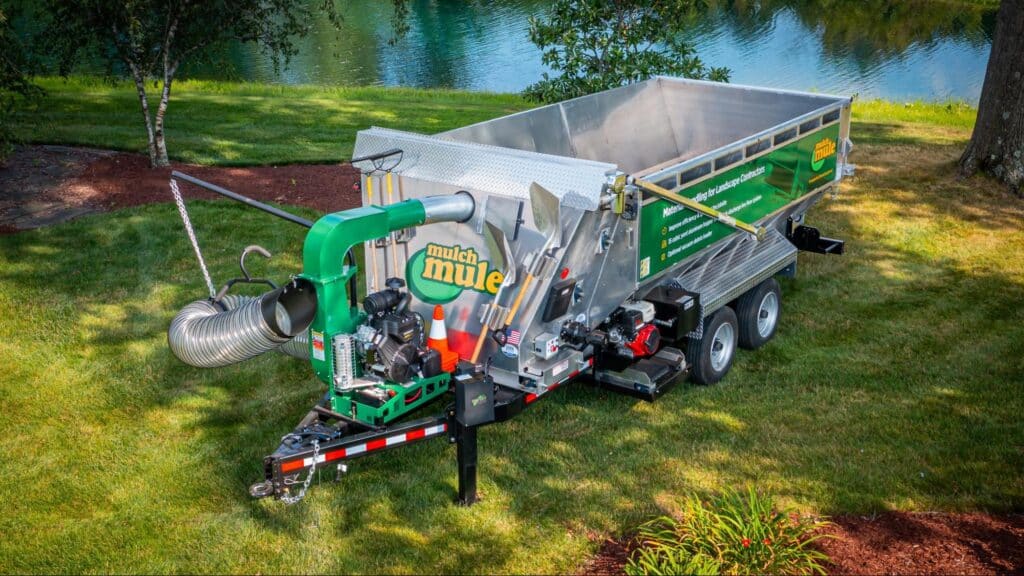
For landscaping businesses eager to expand, having multi-purpose machines that handle top dressing, mulch hauling, and debris collection is key. —and that’s where the Mulch Mule stands out. It’s a high-capacity material hauler with a live-floor system that dispenses bulk product quickly and safely to the point where your crews or spreaders can take over. Such flexibility supports efficient use of resources across different project types. By freeing workers from heavy lifting, these solutions allow teams to focus on higher-value tasks like design, customer engagement, and ongoing site maintenance.
Multi-Use Capability With One Trailer
- Top dressing projects: Haul large volumes of sand, compost, or blends from the stockpile to the turf, then dispense material exactly where it’s needed—or feed directly into most top dressers with the optional 6′ extension conveyor for faster, more controlled loading.
- Landscape installs: Move mulch, soil, and stone to beds and hardscape areas, reducing the number of trips and manual unloading.
- Leaf & debris work: Collect and haul leaves and cleanup debris offsite, using the live floor to empty the load without heavy shoveling.
Stronger Crew Efficiency
- Live-floor unloading dispenses material in a controlled way, cutting down on manual lifting and dumping from standard dump trailers or truck beds.
- Crews spend less time moving material and more time on higher-margin tasks like finish work, enhancements, and customer communication.
Higher Roi From A Single Asset
- One Mulch Mule can replace multiple smaller trailers and improvised hauling setups.
- Fewer trips, faster turnarounds, and less fatigue translate into lower operating costs and more billable work per day.
- As you add routes or properties, the same trailer scales with you instead of needing a fleet of specialized haulers.
By centering your bulk material handling around a versatile live-floor hauler like the Mulch Mule, you turn top dressing support—and every other bulk-material task—into a faster, more predictable, and more profitable part of your year‑round service mix.
Harnessing Cutting-Edge Techniques for Lawn Top Dressing
Top dressing lawns remains a pivotal practice for revitalizing turf and delivering attractive, functional outdoor spaces. Selecting the right materials, preparing the site thoroughly, and using efficient methods—manual for small sites and mechanized for large properties—lays the groundwork for dense, uniform, high‑performing lawns. By leveraging live-floor trailers and other modern equipment, you cut labor hours and get more consistent, controlled distribution.
Ready to elevate your landscaping operations? Discover how Mulch Mule can help you top dress lawns faster, reduce manual handling, and improve profitability. Contact a Mulch Mule ambassador near you for a live demonstration and see how a live-floor trailer can transform your bulk material workflows year‑round.