Seasonal changes bring unique challenges to material handling for landscaping businesses. Tasks that are manageable in one season can become complex or hazardous in another. For example, spring sees high mulch demand with wet, muddy conditions, fall requires efficient leaf management, and winter brings freezing temperatures that can compromise equipment performance and worker safety.
Adapting operations to the season is essential to maintain efficiency, control costs, and ensure safety. This guide provides practical, actionable adjustments to workflows, safety protocols, equipment configurations, and preventive maintenance practices so your business can thrive year-round.
Why Seasonality Demands Tailored Workflows
Landscaping operations differ drastically from season to season. Relying on a single “one-size-fits-all” workflow leads to inefficiencies and safety risks. Consider these points:
- Material Behavior: Mulch is heavy and wet in spring, leaves are abundant in fall, and materials can freeze in winter.
- Weather Impact: Muddy conditions hinder equipment in spring, while autumn leaf fall or icy patches in winter require distinct approaches.
- Safety Priorities: Slippery surfaces in spring, clutter hazards in fall, and cold-induced risks in winter all demand tailored safety measures.
Customizing operations for each season optimizes productivity while protecting both equipment and crew.
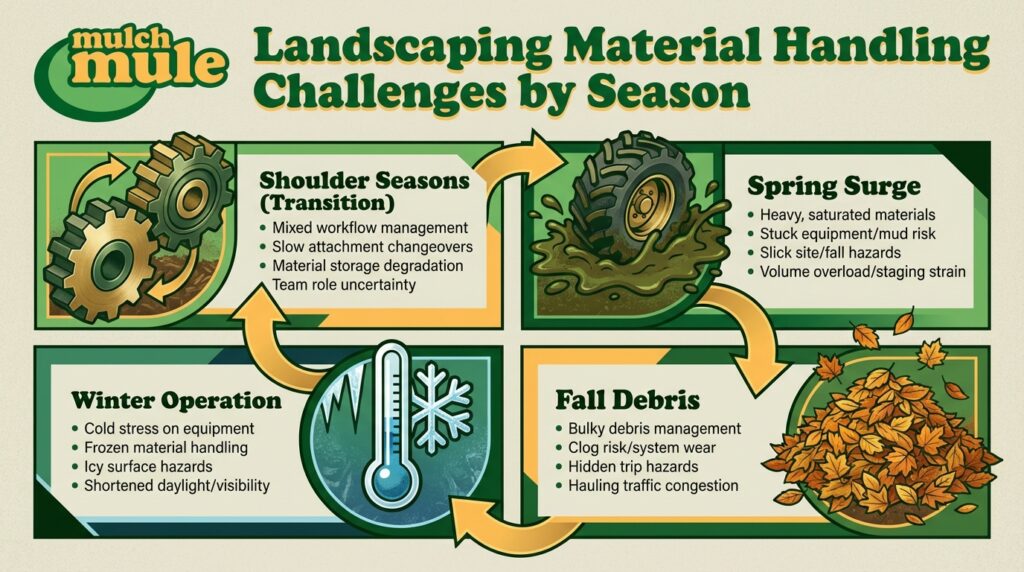
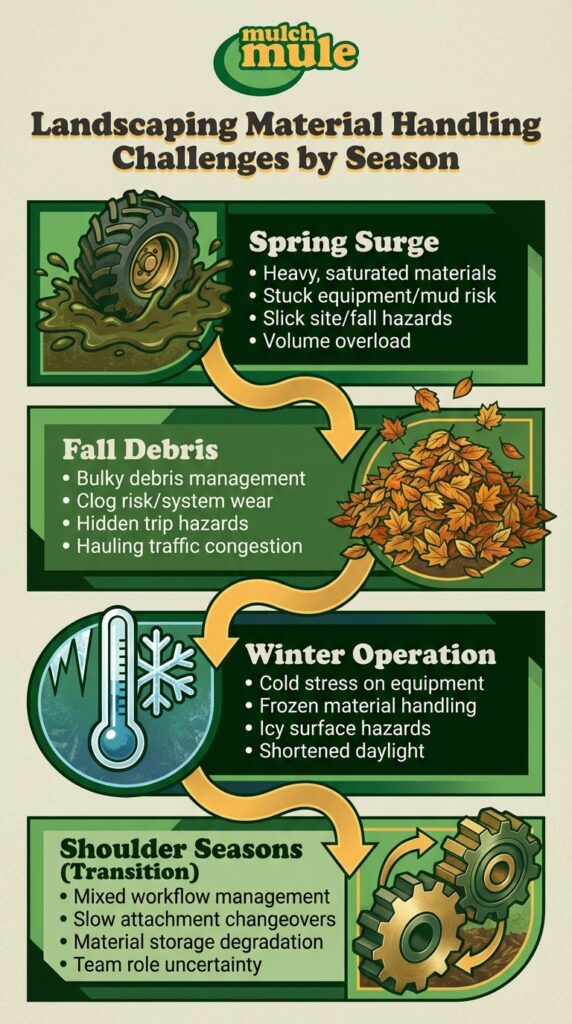
The 4 System Areas You Should Adjust Every Season
Before you jump into season-by-season tactics, use these four system checks to keep material handling consistent year-round. A few small adjustments to workflow, safety, equipment setup, and maintenance each season can prevent bottlenecks, reduce wear, and keep crews moving.
Workflow & Staging
Seasonal volume and site conditions change—your material flow should too. At the start of each season, review the full chain from yard staging to transport, jobsite placement, and cleanup. Reinforce staging areas in muddy months, set clear drop zones for fall debris, and adjust routes to cut backtracking and double-handling.
Safety Controls
Update safety controls to match seasonal hazards. Issue weather-appropriate PPE (wet-weather traction, cold-weather layers, eye protection for debris), refresh exclusion zones as conditions shift, and use spotters when visibility drops. Select equipment based on jobsite hazards and maintain it in safe condition—see OSHA’s Personal Protective Equipment standards. Keep equipment and foot traffic on separate paths to reduce near-misses on slick or cluttered sites.
Equipment Configuration
Configure equipment for the season’s materials and weather. Swap attachments for mulching, leaf handling, or snow/ice work; tune discharge direction/placement to fit the site; and use durable tarps to protect loads from rain or snow. The right setup prevents mess, reduces wear, and keeps crews moving.
Maintenance & Uptime
Treat preventive maintenance as seasonal prep, not an afterthought. Clean mud and check hydraulics in spring, clear debris and service filters in fall, and winterize with freeze-rated fluids and battery checks. Store equipment under cover when possible—season-specific PM reduces breakdowns and extends machine life.
Spring (Mulch Season Surge): Managing High Volumes in Muddy Conditions
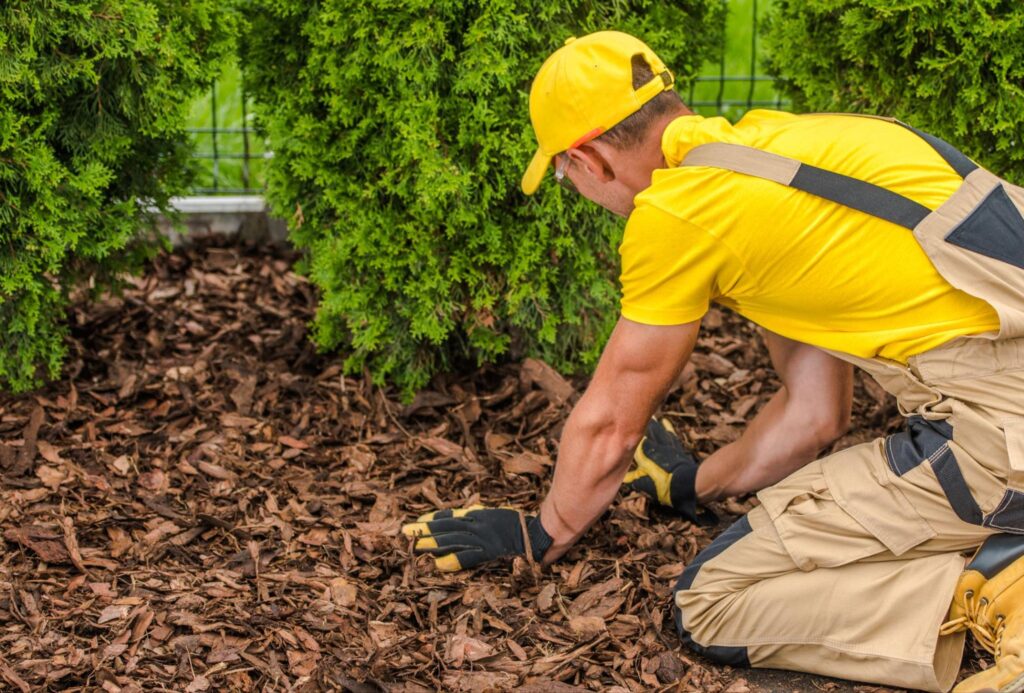
Spring is your highest-volume material season including an increased demand for mulch, and wet ground can slow loading, hauling, and unloading. Focus on keeping material moving efficiently while reducing slip/stuck risks
Streamlined Workflow for Wet Conditions
- Staging: Set up reinforced areas with stable surfaces to facilitate smooth material movement.
- Team Coordination: Schedule smaller, specialized teams to handle tasks efficiently without overcrowding the jobsite.
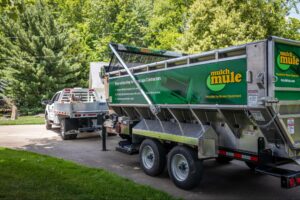
- Optimal Equipment: Use live floor trailers to unload heavy, wet mulch quickly, reducing manual labor and delays.
Safety in the Spring
- Provide high-traction, waterproof boots to minimize slip risks.
- Equip the crew with high-visibility gear to overcome reduced visibility during rain.
- Use temporary ground reinforcements in high-traffic zones to mitigate hazards.
Spring Equipment Maintenance
- Inspect hydraulics and moving parts for rust or mud buildup.
- Wash equipment thoroughly after each job to prevent corrosion.
- Regularly check tires and suspension systems to ensure reliable operation over soft terrain.
Many landscaping companies have found that investing in specialized trailers can yield immediate returns during this high-demand period, supporting a smoother workflow and reducing the reliance on excessive manual labor.
Fall (Leaf Season): Mastering Debris Management
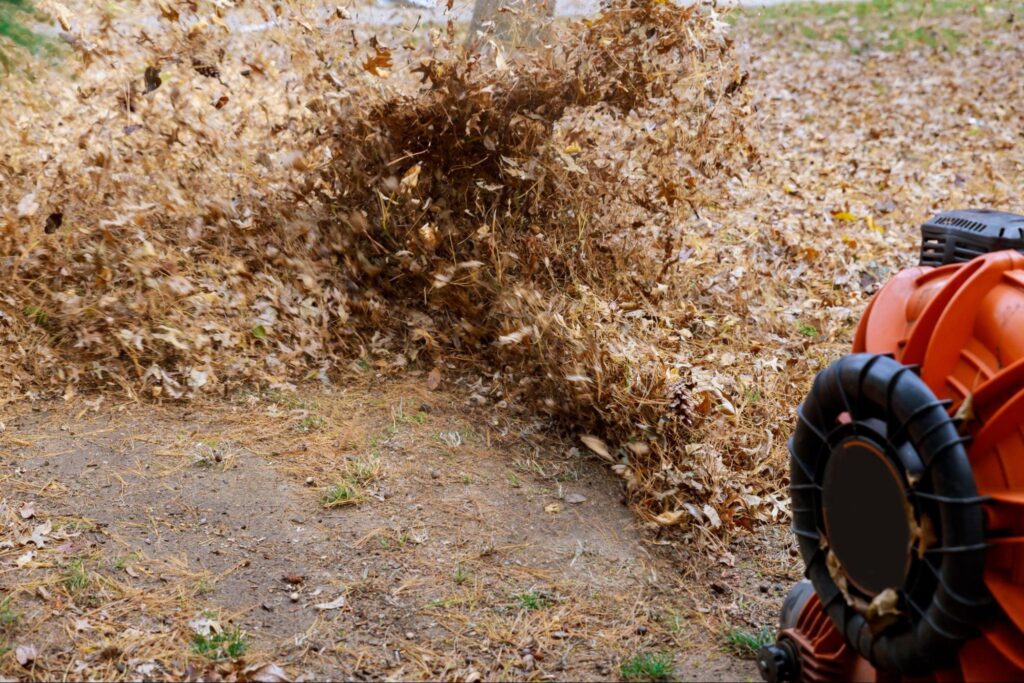
Fall is all about high-volume, lightweight debris that can overwhelm staging areas and clog equipment fast. Set up for rapid collection, clear traffic flow, and consistent dumping so crews don’t lose time to piles, backtracking, or breakdowns.
Workflow Adjustments for Debris
- Centralized Collection: Establish clear zones to keep the workspace organized.
- Traffic Management: Designate separate routes for equipment and workers to reduce congestion.
- Scheduled Collection: Plan specific times for debris pickup to maintain a smooth workflow.
Specialized Equipment Use
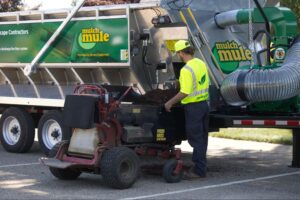
- Employ vacuum debris loaders to reduce manual labor and quickly gather leaves.
- Deploy high-capacity trailers that minimize the number of trips needed.
- Use equipment with flexible discharge options to suit various jobsite layouts.
Fall Safety Measures
- Train workers to watch for hidden trip hazards in leaf piles.
- Equip operators with proper PPE, including goggles and face shields, to protect against flying debris.
- Prepare for rapidly changing weather with appropriate waterproof and high-traction clothing.
Maintenance Focus in Fall
- Prevent clogs in leaf vacuums with frequent inspections.
- Clean air filters regularly to remove fine debris.
- Inspect moving parts to detect wear caused by dense leaf collection.
Conducting end-of-season evaluations to assess debris collection efficiency can help refine your strategy for future jobs. Many landscapers have seen improvements by utilizing equipment designed for high-volume debris handling.
Winter (Off-Season Doesn’t Mean Idle): Operating in the Cold
Winter is less about volume and more about reliability—cold weather stresses equipment, reduces daylight, and increases surface hazards. Prioritize safe footing, cold-ready gear, and maintenance-driven uptime while staying ready for opportunistic work. Safety note: For signs, prevention, and response steps related to cold stress (hypothermia, frostbite, trench foot), follow OSHA and NIOSH guidance.
Efficient Winter Workflows
- Alternative Projects: Consider winter property cleanups, minor maintenance tasks, or material deliveries.
- Consolidated Task Days: Group heavier tasks to free up time for thorough maintenance.
- Pre-Spring Preparation: Organize tools and plan early so you can move swiftly when demand returns.
Equipment Adaptations for Cold Conditions
- Use live floor trailers to maintain smooth material flow even when materials are partially frozen.
- Employ attachments designed to break up compacted or icy materials.
- Adjust equipment settings for harsh winter terrain.
Winter Safety Protocols
- Apply de-icing solutions and sand to counter icy surfaces.
- Use adequate lighting for short daylight hours.
- Provide insulated PPE such as gloves, waterproof boots, and layered clothing.
- Schedule regular warm breaks to maintain health and productivity.
Winter Maintenance Essentials
- Switch to winter-grade fluids and additives to prevent thickening.
- After each job, wash off ice, salt, and de-icers to prevent corrosion.
- Inspect batteries and hoses frequently, using insulated alternatives when needed.
Some landscapers take on off-season services like hauling gravel or clearing residual debris, ensuring their equipment is well-maintained for when the busy season returns. Proactive service scheduling in winter can also build strong customer loyalty.
Shoulder Seasons: Smooth Transitions Between Peak Periods
The transition weeks are where efficiency is won or lost—teams juggle mixed materials, shifting services, and changing site conditions. Use a short changeover process (attachments, supplies, crew roles, and routing) to avoid a slow, messy handoff into the next season.
Transition Checklist
- Equipment Adjustments: Determine whether winter attachments should remain or be swapped for spring tools.
- Material Audit: Check stored materials for signs of degradation.
- Team Readiness: Gather feedback on the previous season to inform process improvements.
Balancing Mixed Workflows
- Combine tasks serving both seasonal needs, such as simultaneous leaf cleanup and soil preparation.
- Divide crews so that while one team finishes debris removal, another begins early planting or mulch spreading.
Readiness Indicators
- Monitor how quickly equipment attachments can be changed.
- Confirm material availability from suppliers in advance.
- Cross-train employees to manage a variety of seasonal tasks.
Proper shoulder season management minimizes downtime and sets your operation up for long-term success.
Seasonal KPI Dashboard
Tracking key performance indicators (KPIs) ensures operations can be fine-tuned using real data.
Spring Metrics
- Yards of Material Handled Per Day: Measure overall productivity for increased mulch volumes.
- Labor Efficiency (Hours Per Yard): Identify ways to reduce manual labor.
- Reload Turnaround Time: Spot bottlenecks to streamline processes.
- On-Time Project Completion Rate: Maintain high customer satisfaction.
Fall Metrics
- Properties Serviced Per Day: Gauge how many job sites are completed efficiently.
- Disposal Efficiency: Track dump runs to optimize leaf removal.
- Downtime Due to Clogs or Breakdowns: Identify maintenance needs.
- Cleanup Duration: Ensure tasks are completed swiftly without sacrificing quality.
Winter Metrics
- Response Time: Assess how quickly crews respond to off-season jobs.
- Equipment Downtime Percentage: Track maintenance issues to reduce delays.
- Material Waste: Monitor losses due to freezing or improper storage.
- Pre-Project Readiness: Measure preparedness before taking on winter jobs.
Regular KPI monitoring fosters data-driven decisions, improving efficiency and reducing waste across seasons.
Corrective Adjustments for Unexpected Challenges
Even the best plans can be interrupted by sudden weather changes or equipment issues. Prepare by:
- Real-Time Monitoring: Use weather tools to adjust schedules on short notice.
- Cross-Training: Equip your crew to tackle multiple roles.
- Versatile Equipment: Invest in multi-use tools that adapt to shifting tasks.
- Clear Communication: Keep clients informed of changes to maintain trust.
- Contingency Planning: Build buffers into schedules to absorb unavoidable delays.
These measures help protect your operation from unforeseen challenges while maintaining consistent service quality.
What to Know Before You Upgrade
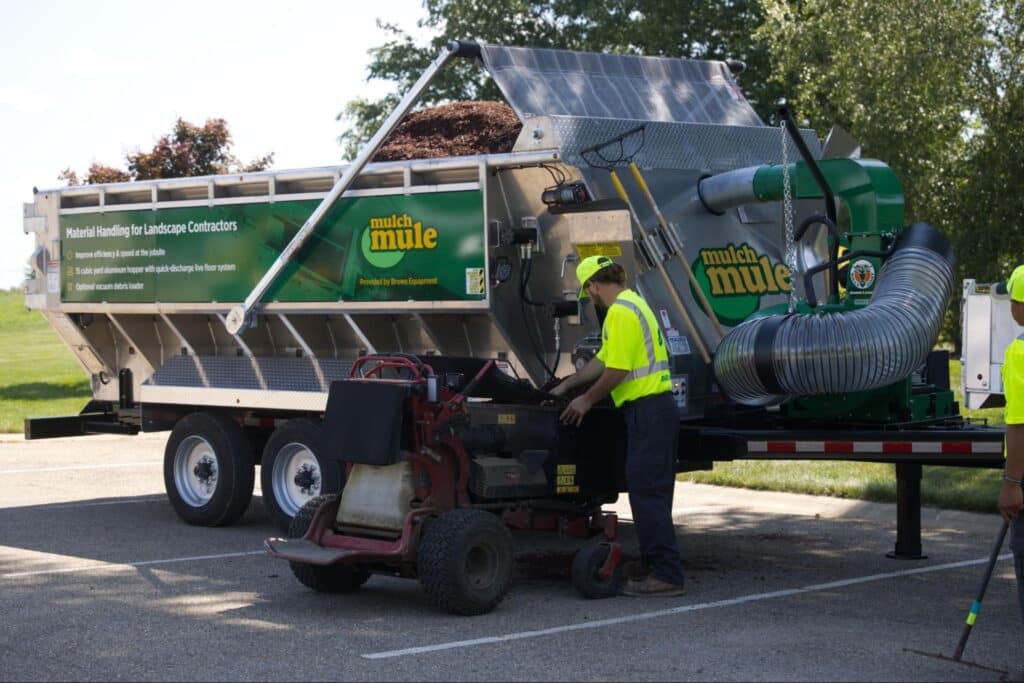
When adopting specialized equipment or adjusting workflows, a little planning goes a long way:
- Investment Planning: Larger trailers, vacuum loaders, and other specialized equipment represent a meaningful upfront investment—one that typically pays back through labor savings and increased capacity.
- Training Opportunities: Operators may benefit from additional training to get the most out of live floor systems or vacuum loaders, which also builds team skills and confidence.
- Storage and Maintenance: Certain attachments require dedicated storage space and regular upkeep, especially in challenging seasonal conditions—factor this into your facility planning.
- Adjustment Period: Teams might need time to adapt to new processes and equipment, but productivity typically rebounds quickly once routines are established.
Understanding these factors upfront helps you set realistic timelines and ensures a smooth transition as your operation grows.
Frequently Asked Questions (FAQ)
What is seasonal material handling in landscaping?
Seasonal material handling is the process of adjusting how you stage, transport, unload, and clean up materials as weather, site conditions, and material behavior change throughout the year. The goal is to keep crews efficient, safe, and consistent even when volume spikes or conditions worsen.
What’s the most efficient way to handle wet mulch in spring?
Start by reinforcing staging and high-traffic areas (gravel, mats, or designated stable zones) to prevent vehicles and crews from getting bogged down. Use equipment that reduces manual handling and speeds unloading—especially when mulch is heavy and waterlogged—and plan routes that minimize backtracking on soft ground.
How do we prevent getting stuck or damaging turf during muddy months?
Limit traffic to defined routes, use temporary ground protection in turning and unloading areas, and keep staging zones on the most stable surface available. When possible, split deliveries into smaller drops to reduce repeated heavy-equipment passes over saturated ground.
How can we reduce leaf season congestion and cleanup time?
Use centralized collection zones, separate equipment routes from pedestrian paths, and schedule consistent pickup/dump times so debris doesn’t pile up. Pair that workflow with high-volume collection tools (like vacuum loaders and high-capacity hauling) to reduce trips and prevent bottlenecks.
How do you prevent leaf vacuums and collection systems from clogging?
Clogs are usually caused by wet, compacted material and neglected filters. Train crews to avoid overfeeding, inspect hoses and airflow points regularly, and clean filters frequently—especially during peak leaf volume days or after working in damp conditions.
What maintenance should we prioritize before winter storage?
Clean equipment thoroughly (mud, debris, salt), inspect wear components, service filters, and switch to winter-grade fluids where needed. Battery health and hoses also deserve extra attention, since cold temperatures can expose weaknesses quickly.
How do we stay productive when weather suddenly changes the plan?
Build flexibility into the schedule, monitor forecasts daily, and keep a simple contingency playbook (alternate tasks, reroutes, backup equipment, and communication templates). Cross-training helps crews shift roles quickly, so one disruption doesn’t stall the entire day.
Staying Competitive Through Seasonal Adaptation
Adapting landscaping operations to meet seasonal challenges is key to maintaining efficiency, safety, and quality service throughout the year. By refining workflows, implementing tailored safety protocols, configuring equipment to suit seasonal needs, and maintaining a proactive maintenance schedule, your business can overcome seasonal hurdles and foster long-term growth.
Building a comprehensive record of seasonal performance and aligning your team with the right tools can lead to significant cost savings and improved staff morale. When your workforce feels supported by well-maintained equipment and well-planned workflows, productivity standards naturally rise. Over time, these refinements become integral to your business model, nurturing a culture of continuous improvement that sets you apart from competitors.
If you’re ready to enhance your material handling efficiency with specialized solutions and expert guidance, contact Mulch Mule today. Watch this video to learn why owners who own this innovative piece of equipment say it’s the most durable, versatile and efficient piece of equipment for landscaping.