Choosing the right mulching method is a critical business decision that directly impacts your efficiency, labor costs, and profitability. While the end goal is a professional finish, the path you take to get there can either drain your resources or drive your growth. An inefficient process leads to wasted materials, higher payroll, and a tired crew, limiting the number of jobs you can take on.
This article will break down the three primary mulching methods—manual application, mulch trailers, and mulch blowers. We will analyze the pros and cons of each, followed by a direct comparison to help you identify the most strategic fit for your business. By understanding how each technique affects your operations, you can make an informed choice to boost productivity and stay competitive.
The Importance of Mulching in Landscaping
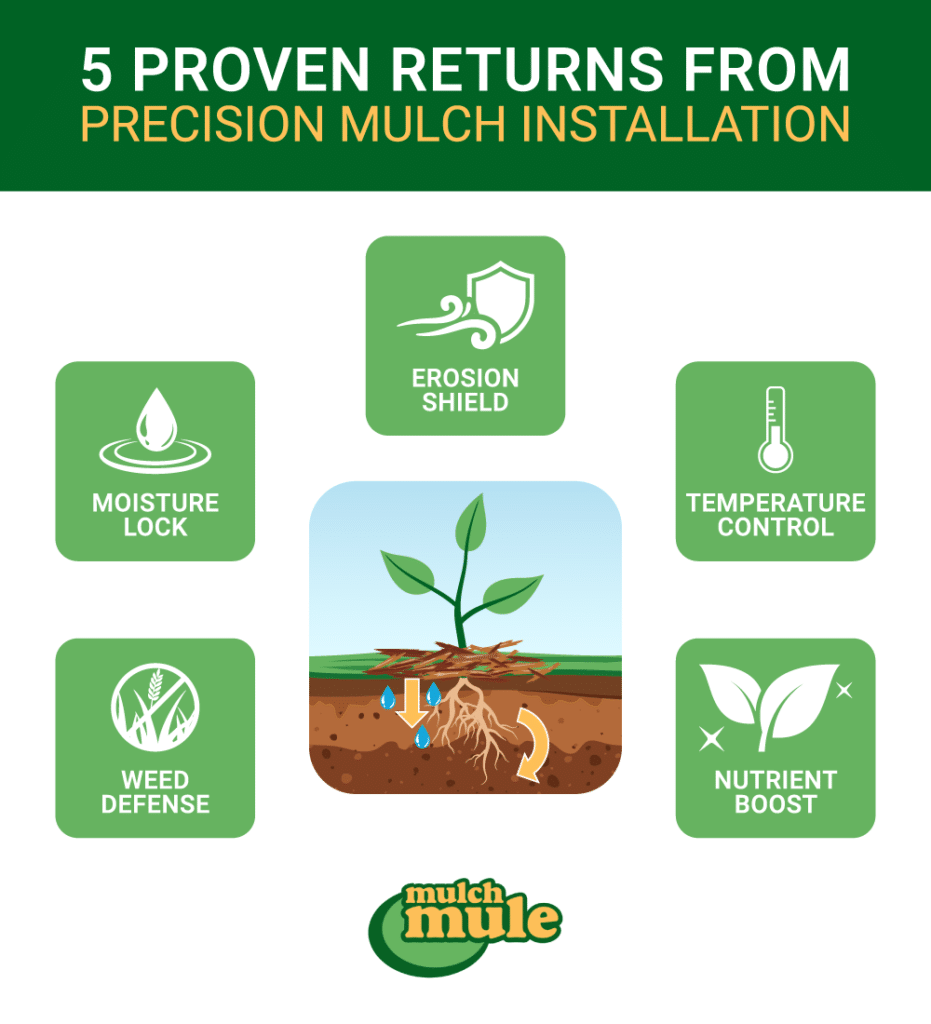
Beyond the operational benefits for your business, the quality of your mulching service is what clients see and value. A professional application does more than just enhance curb appeal; it’s a vital part of landscape maintenance. The benefits of properly applied mulch include suppressing weeds, insulating the soil to regulate temperature, retaining essential moisture for plant health, helping to prevent erosion, and enriching the soil as it decomposes.
Achieving these benefits hinges on an effective application method. An inconsistent or poorly executed job can lead to wasted material and a less-than-perfect result. Therefore, selecting the right technique is crucial not only for your bottom line but also for delivering the functional and aesthetic quality that defines professional landscaping.

Three Primary Mulching Techniques
In professional landscaping, three main techniques are commonly employed: manual mulching application, mulch trailers, and mulch blowers. Each method offers unique benefits and challenges, making them suitable for different project sizes and budgets.
1. Manual Mulching Application
Manual mulching is the traditional method that relies on basic tools such as wheelbarrows, shovels, and rakes. This approach is best suited for smaller jobs or areas where precision is necessary, such as around delicate shrubbery or in confined spaces.
How It Works
- Bulk or bagged mulch is delivered to the site—often dumped in a pile or transported in a trailer.
- Workers load mulch into wheelbarrows, sometimes by climbing into the back of a dump trailer to pitch mulch down.
- Mulch is manually spread using shovels and rakes.
Strengths of Manual Mulching
- Cost-Effective Equipment: Minimal upfront costs, as most teams already possess the necessary tools.
- High Precision: Allows detailed placement in areas requiring careful attention.
- Accessibility: Ideal for tight or awkward spaces where machinery cannot operate easily.
Limitations of Manual Mulching
- Labor-Intensive: Requires considerable physical effort and a full crew.
- Time Consuming: Slower pace on larger jobs leads to higher labor costs.
- Physical Strain: Repetitive motions increase the risk of worker fatigue and injuries.
2. Mulching with Trailers
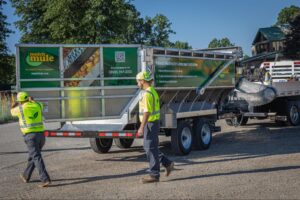
Mulch trailers, such as the efficient Mulch Mule, offer a modern, automated solution for bulk mulch handling. These machines minimize the physical labor involved and expedite project timelines while reducing worker strain. Unlike blowers, which use air pressure to distribute mulch, trailers use discharge systems to handle materials with precision.
How It Works
- Trailers are filled with mulch using skid loaders or similar equipment.
- The trailer is transported and positioned near the landscaping area.
- Automated systems—such as live floor systems—deliver mulch onto the ground or into wheelbarrows.
Key Benefits of Mulch Trailers
- Labor Reduction: Automation cuts down manual tasks.
- Faster Project Completion: Large-capacity hoppers and quick-discharge systems boost efficiency.
- Versatility: Can transport soil, leaves, debris, and more, ensuring year-round utility.
- Long-Term Savings: Although the initial investment is higher, reduced labor costs, increased safety, and improved crew morale yield substantial long-term returns.
Challenges of Using Mulch Trailers
- Upfront Costs: Higher initial expenses compared to manual methods.
- Maintenance Needs: Requires regular servicing of engines, hydraulics, and discharge systems.
- Operational Training: Crew members must be trained to operate the equipment safely.
3. Mulch Blowers
Mulch blowers, sometimes called bark blowers, offer the fastest and most hands-off approach for large-scale mulching tasks. These machines use high-powered air pressure to spray mulch accurately through a hose, making them ideal for extensive commercial properties or difficult terrains like slopes.
How It Works
- A mulch blower is loaded with material into its hopper.
- Operators direct a flexible hose to spray mulch onto designated areas.
- The blower distributes mulch evenly at adjustable speeds for precise coverage.
Advantages of Mulch Blowers
- Speed and Efficiency: Capable of covering extensive areas quickly.
- Reduced Physical Labor: Less manual effort compared to shoveling or raking.
- Effective on Complex Terrains: Well-suited for slopes and hard-to-reach spaces.
Drawbacks of Mulch Blowers
- High Costs: Highest purchase and maintenance investment of the three methods.
- High Maintenance & Complexity: More moving parts and specialized components increase service needs compared to trailer-based systems.
- Overspray & Cleanup: Air-driven mulch can hit siding, shrubs, and plants, and dry material can create dust around windows and nearby areas.
- Skill-Dependent: Requires a highly trained operator, and results can vary significantly based on operator skill.
Direct Comparison of Mulching Methods
Selecting the right mulching method involves evaluating factors such as efficiency, labor demands, costs, and suitability for the project.
| Criterion | Manual Application | Mulch Trailer | Mulch Blower |
| Efficiency & Speed | Slow; relies heavily on manual labor and crew efficiency. | Optimized for bulk handling; moderate to fast pace for larger jobs. | Fastest; ideal for large areas and challenging terrains. |
| Labor Requirements | High; requires a full crew for shoveling, transporting, and spreading. | Reduced labor; equipment handles bulk material distribution efficiently. | Minimal labor; typically one or two operators are sufficient. |
| Cost Analysis | Low upfront tool cost but higher labor expenses over time. | Moderate investment with long-term savings from labor efficiency. | High investment and maintenance costs. |
| Project Suitability | Best for small, detail-oriented projects requiring precision. | Ideal for medium to large-scale projects with diverse material needs. | Suited for expansive commercial projects and steep landscapes. |
Key Takeaways
- Manual Application: Works well for small, detail-oriented projects but becomes inefficient for larger jobs.
- Mulch Trailers: Offer a balanced solution that combines efficiency and cost-effectiveness, significantly reducing physical labor requirements.
- Mulch Blowers: Provide rapid coverage and excel on challenging terrains, though their high costs may limit their use for smaller projects.
Why Mulch Trailers Excel
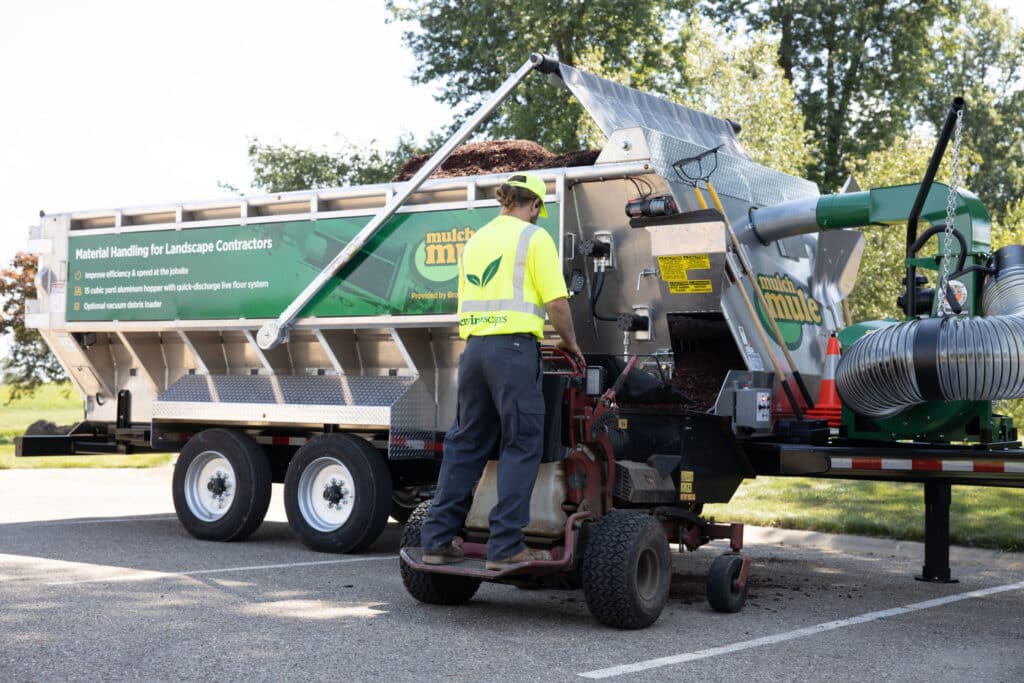
For landscaping businesses caught between the limitations of manual labor and the high costs of mulch blowers, mulch trailers emerge as a middle-ground solution. They offer unmatched versatility, efficiency, and value, streamlining material handling while reducing physical strain.
Bridging the Gap Between Methods
Mulch trailers deliver efficiency without compromising affordability or precision. They enable teams to handle bulk materials more quickly while maintaining control over material placement—qualities that manual methods cannot match and blowers may lack due to their complexity.
Enhanced Efficiency and Worker Safety
Automating the mulching process with trailers cuts down on repetitive tasks like shoveling and loading. Features such as live floor systems ensure smooth, consistent material distribution, reducing project time and minimizing the risk of injuries from manual labor. This focus on worker safety helps protect your crew while boosting overall productivity.
Driving Cost Savings and Business Growth
Though mulch trailers represent an upfront investment, their ability to complete projects faster and with fewer labor hours makes them cost-effective in the long run. Improved efficiency means landscapers can take on more jobs and boost profitability while ensuring high-quality service.
Features That Set the Mulch Mule Apart
The Mulch Mule trailer exemplifies the advantages of a well-designed mulch trailer:
- Generous Capacity: Its 15-cubic-yard aluminum hopper minimizes trips to refill and maximizes on-site work.
- Live Floor Systems: Provide smooth and quick discharge, reducing downtime.
- Versatility: Capable of handling various materials besides mulch.
- Efficiency-Driven Design: Discharges material quickly with precise control via handheld remote.
- Durability and Safety: Built to withstand heavy use with robust suspension and a design that reduces the risks associated with manual mulching.
Click the video below to hear Keegan Minard, the owner of Minards Landscape, talk about his experience starting out in the landscape design industry and how the Mulch Mule has helped him.
Before Mulch Mule they were typically doing 50 to 80-90 yards a mulch a day. Since purchasing the equipment they are seeing double the productivity with the same amount of workers.
Finding the Right Mulching Solution for Your Business
Selecting the ideal mulching method requires careful evaluation of project size, budget, labor capacity, and terrain challenges. Manual application is effective for small, detail-oriented projects, while mulch blowers offer rapid coverage for large or complex sites. However, for many landscaping professionals, mulch trailers like the Mulch Mule strike the perfect balance between cost, efficiency, and ease of use.
Mulch trailers reduce manual labor, enhance worker safety, and streamline project completion—all of which contribute to improved profitability and business growth. If you’re ready to elevate your landscaping operations, consider integrating a mulch trailer into your workflow.
Contact Mulch Mule today to learn how mulch trailers can cut labor costs, boost productivity, and drive your business forward. Embrace modern mulching solutions and set the stage for lasting success in your landscaping projects.