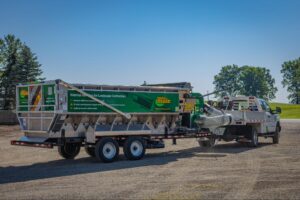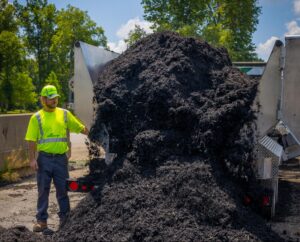
Efficiently delivering bulk mulch remains a critical challenge for commercial landscaping businesses. With tight schedules and labor-intensive processes, companies must carefully choose equipment that reduces costs, speeds up operations, and minimizes safety risks. Two popular solutions in the industry are traditional dump trailers and the innovative Mulch Mule. This guide compares these systems so you can make an informed decision based on your project size, budget, and safety priorities.
Comparing the Systems: An Overview
Dump trailers have long been used for transporting landscaping materials. Their simple hydraulic tipping mechanism enables a straightforward unloading process. In some situations—especially when handling sticky or clumping materials—a small amount of residual material may remain, sometimes requiring manual cleanup. In contrast, the Mulch Mule is designed specifically for the landscaping market. Using an automated live floor conveyor and curbside discharge, it unloads materials efficiently with little need for manual intervention. Although both systems serve similar functions, their operational workflows influence overall cost, speed, and safety.
Cost Efficiency: Breaking Down the Numbers
Evaluating cost effectiveness requires considering several factors: initial equipment investment, labor costs, fuel consumption, and any downtime related to material handling. While dump trailers generally have a lower upfront cost, there can be instances where residual material requires additional cleanup. The extent of this cleanup varies with the material handled and may not always significantly impact labor expenses.
With the Mulch Mule, the higher initial investment is often offset by its automated process, which minimizes labor needs and speeds up job completion. Consider three typical job sizes:
- Small Jobs (20 yards or less): For less demanding projects, a dump trailer’s lower cost may be sufficient. The tipping mechanism cuts manual labor, though occasional cleanup may still be required.
- Medium Jobs (Around 40 yards): As job sizes increase, added efficiencies become more important. The Mulch Mule’s live floor conveyor system can further reduce labor requirements and accelerate unloading.
- Large Jobs (100+ yards): High-volume projects benefit most from the advanced automation of the Mulch Mule. Its rapid discharge and precise material placement help shorten project times, lowering the cost per yard delivered.
Ultimately, the decision often hinges on scale and frequency. For regular, high-volume work, the Mulch Mule’s long-term labor and time savings may outweigh the higher purchase price, while for smaller, infrequent jobs, a dump trailer is a viable alternative.
Speed and Productivity in the Field
Time is money in commercial landscaping. Dump trailers rely on hydraulic tipping to unload quickly, but crews often still spend significant time manually moving and wheelbarrow-loading material. By contrast, the Mulch Mule’s automated live floor conveyor directs materials rapidly and thoroughly, minimizing extra handling and manual clearing.
This workflow means:
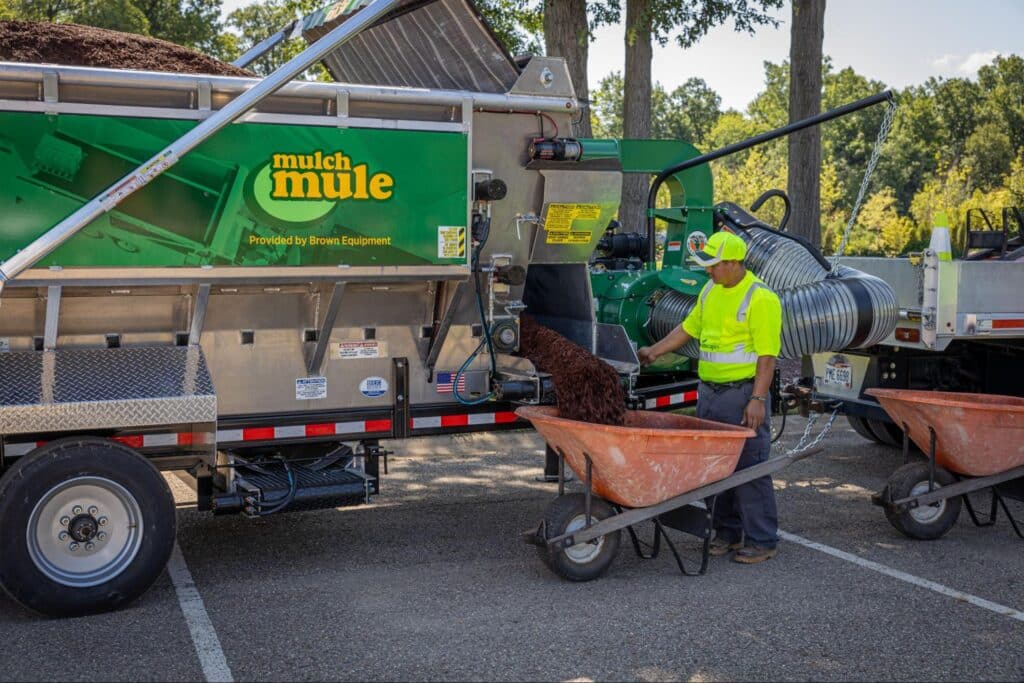
- Rapid Unloading: Dump trailers tip fast, but crews still typically hand-load material into wheelbarrows (often climbing into the bed to scoop and pitch). The Mulch Mule’s live-floor conveyor feeds material directly into a wheelbarrow in a steady, controlled flow.
- Better Crew Utilization: With less time spent scooping/pitching into wheelbarrows, you can reassign staff to higher-value tasks.
- Faster Job Completion: Saving time unloading and reshuffling personnel enables projects to wrap up sooner, bringing opportunities to take on additional contracts.
Profitability, efficiency, simplicity, and employee morale are just some of the benefits of using Mulch Mule for mulch, soil, gravel and then vacuuming leaves in the fall. Andrew and Anthony Gage are happy customers of two Mulch Mules! Click on the video below to hear what they have to say about their experience with the Mulch Mule.
Safety and Injury Risk Comparison
Safety is paramount for any landscaping business. While dump trailers use hydraulics to tip a load, crews often still handle material manually to fill wheelbarrows and place product—work that can involve heavy, repetitive lifting and, at times, climbing into the trailer bed. The Mulch Mule reduces hands-on handling by using a live-floor conveyor with curbside discharge to control the flow of material.
Key safety features include:
- Conveyor-Assisted Unloading (Mulch Mule): Dump trailers rely on tipping, which still leaves crews doing the bulk of the wheelbarrow loading by hand. The Mulch Mule’s live-floor conveyor delivers material in a steady, controlled flow—often directly into a wheelbarrow—reducing shoveling/pitching and crew fatigue on large jobs.
- Safer Working Position: Dump trailer workflows can put workers in or around the trailer bed and shifting material. With curbside discharge, Mulch Mule helps keep operators on stable ground and out of the load area, reducing slip/trip/fall exposure.
- Reduced Repetition: A more consistent unloading process can cut down on repetitive shoveling and lifting cycles, helping reduce overuse injuries over time.
Fewer injuries not only benefit employees but also help keep operations on schedule and within budget.
When Dump Trailers May Still Make Sense
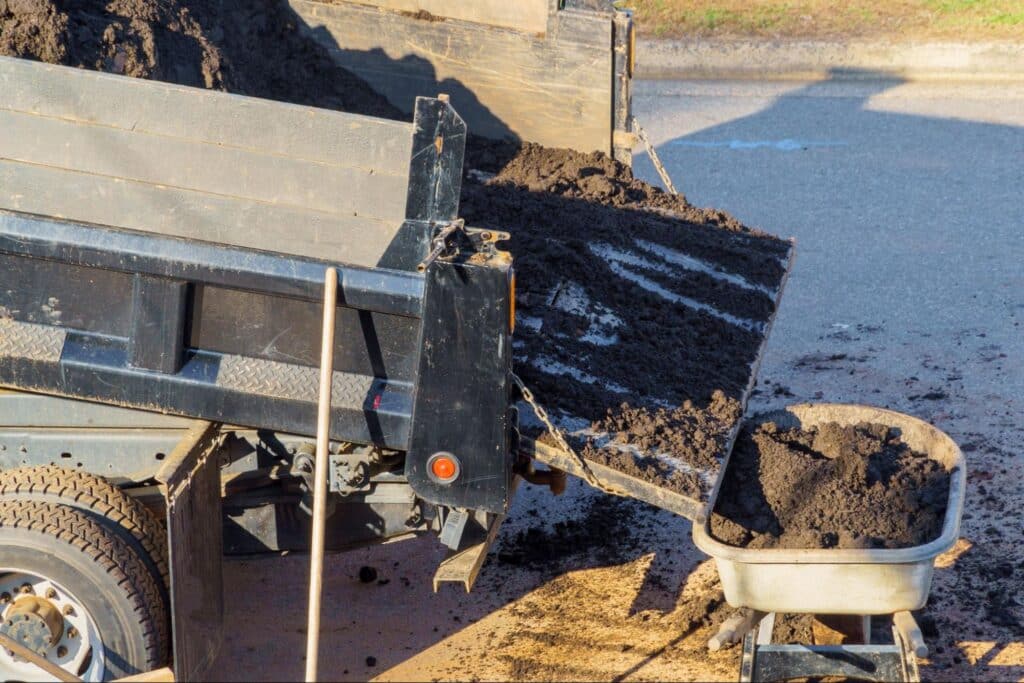
While the Mulch Mule offers strong advantages for larger-scale, ongoing work, dump trailers can be more practical in certain circumstances:
- Smaller-Scale Operations: For under 20 cubic yards, a dump trailer’s lower entry cost and effective tipping may be enough.
- Tighter Budgets: New or cash-constrained companies might currently value a more affordable dump trailer, accepting that occasional manual cleanup could be necessary.
Ultimately, the choice depends on your project volume, equipment budget, and flexibility needs.
Decision Framework and Practical Checklist
Before choosing between a dump trailer and the Mulch Mule, consider:
- Project Volume: How many cubic yards you frequently handle.
- Labor Requirements: Whether your costs and schedules are significantly impacted by material handling.
- Safety Concerns: How much risk of injury might result from manual cleanup or repetitive motions.
- Long-Term ROI: Whether time, labor, and faster project turnarounds will offset a higher purchase price.
- Growth Plans: Whether your business is aiming to expand into more frequent, large-scale work.
Balancing these factors ensures your choice aligns both with your current operational demands and your future goals.
Mulch Mule vs. Dump Trailer FAQ: Cost, Speed, Safety
What is the main difference between a Mulch Mule and a dump trailer?
A dump trailer unloads by tipping the bed, then crews typically still move and place material by hand. The Mulch Mule is designed specifically for landscaping, using a continuous live-floor conveyor with curbside discharge to feed material out in a controlled flow—often directly into a wheelbarrow—so there’s less manual handling and faster, cleaner unloading.
Which option is more cost-effective: a Mulch Mule or a dump trailer?
Dump trailers usually have a lower upfront cost and can be cost-effective for smaller or infrequent jobs. The Mulch Mule often delivers better long-term value for regular, high-volume work by reducing labor needs, speeding up jobs, and lowering the cost per yard delivered over time.
When does the Mulch Mule provide the biggest advantage?
The Mulch Mule shines on medium jobs around 40 yards and large jobs over 100 yards, where its automation and speed significantly reduce labor and unloading time. For companies regularly handling higher volumes, these efficiencies can outweigh its higher initial investment.
How does the Mulch Mule improve speed and productivity compared to a dump trailer?
The Mulch Mule automates wheelbarrow filling with its live floor conveyor and curbside discharge, delivering a steady flow of material directly into the barrow. That eliminates the common dump trailer workflow of a worker climbing in and out of the trailer bed to scoop/pitch material into wheelbarrows—saving time, reducing crew fatigue, and improving safety so crews can move through jobs faster.
How do dump trailers and the Mulch Mule compare on safety?
Dump trailers use hydraulics to tip the load, but crews still typically do heavy, repetitive work to fill wheelbarrows and place material—sometimes climbing in and out of the trailer bed to scoop/pitch material. The Mulch Mule improves safety by automating wheelbarrow filling with a live-floor conveyor and curbside discharge, helping operators stay on stable ground, reduce repetitive lifting, and lower fatigue and injury risk over time.
Choosing the Right Equipment: A Strategic Decision for Your Business
Selecting the right equipment is a strategic decision that affects both productivity and safety. Dump trailers offer a lower initial price and streamlined hydraulic tipping, though some leftover debris may require minimal cleanup. In contrast, the Mulch Mule excels at speed, labor savings, and safety for larger or more frequent commercial projects.
Evaluate your operations against the factors above to determine which solution best fits your needs. If your goal is to streamline workflows, expand capacity, and invest in year-round efficiency, the Mulch Mule is a robust option. Schedule a live demonstration today and find out how the Mulch Mule trailer can reduce costs and optimize safety for your landscaping projects. Start transforming your landscaping operations today.