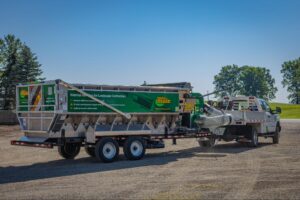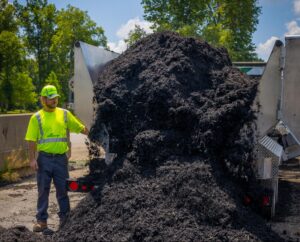
Landscaping businesses often juggle tight budgets with demanding project schedules. Crews may still rely on manual processes that can contribute to fatigue, insurance concerns, and rising operating costs. Efficient material handling is critical to sustaining profitability, particularly when bulk mulch, soil, leaves, or debris must be moved across multiple jobsites or throughout busy seasons.
Using outdated trailers or wheelbarrows may contribute to inefficiencies that, in turn, lead to increased overtime, a higher risk of injuries, and elevated insurance premiums. Over time, these challenges can limit growth and dampen employee morale. Smart equipment choices—especially investing in labor-saving equipment like the Mulch Mule—can directly streamline workflows, reduce repetitive physical labor, and improve overall jobsite safety.
The Hidden Costs of Traditional Landscaping Methods
Traditional manual methods—like shoveling mulch or using outdated dump trailers—can look inexpensive on paper but quietly drive up operating costs over time. Crews spend extra hours on repetitive loading and unloading, older trailers force multiple trips back to the yard, and whole teams can end up waiting while materials are moved or repositioned. That lost time shows up as overtime, fuel waste, and reduced capacity to take on additional jobs.
At the same time, repeated heavy lifting and awkward pushing or pulling increase the risk of injuries such as back and shoulder injuries, which can lead to costly workers’ compensation claims in the landscaping industry, higher insurance premiums, and schedule disruption when key team members are sidelined. Add in the material waste from spills or inaccurate placement and the impact on morale when crews are worn down by physically punishing tasks, and the “cheap” approach to material handling often becomes one of the most expensive parts of the business—just in ways that don’t always show up on an initial equipment quote.
Real Savings: Manual Labor vs. Mulch Mule—A Clear Comparison
The following scenario is for example purposes only to illustrate potential savings; actual labor rates, crew sizes, and job times will vary by company, project, and market.
Imagine a typical large mulch install: 15 cubic yards spread across several beds on a commercial property. Here’s how manual methods might compare with using a Mulch Mule trailer:
| Factor | Manual Methods | With Mulch Mule Trailer |
| Volume handled | 15 cubic yards | 15 cubic yards |
| Unloading & staging time | ~3–4 hours of shoveling/wheelbarrowing | ~1 hr unloading/staging (fills wheelbarrows in 3–6 sec; typically not dumped in a pile) |
| Total job time (on-site) | 6–8 crew hours (including trips and regrouping) | ~1–2 hrs on-site (3–4 workers) |
| Typical crew size | 4 workers | 2–3 workers |
| Labor hours for material move | 24–32 hours (4 workers × 6–8 hours) | 6–12 hours (2–3 workers × 3–4 hours) |
| Labor cost @ $25/hr (example) | $600–$800 per job | $150–$300 per job |
| Overtime risk | High on busy days/peak season | Much lower; jobs more likely to finish on time |
| Injury/strain exposure | Continuous heavy lifting and pushing | Greatly reduced; one operator controls live floor |
| Schedule impact | Jobs may spill into next day, limiting new bookings | Higher chance of same‑day completion, more capacity |
Using this hypothetical scenario, even at a conservative $25/hour loaded wage, shifting from manual hauling to a Mulch Mule could save $300–$450 in labor on a single 15‑yard job. Multiplied across a busy season, that kind of difference can help cover a significant portion of the trailer’s cost—or even pay it off entirely—while also reducing injury exposure and overtime.
Again, these numbers are illustrative only. To understand your own potential savings, substitute your actual wage rates, crew sizes, and job times into a similar comparison based on real projects from your operation.
Maximizing ROI from Equipment Upgrades
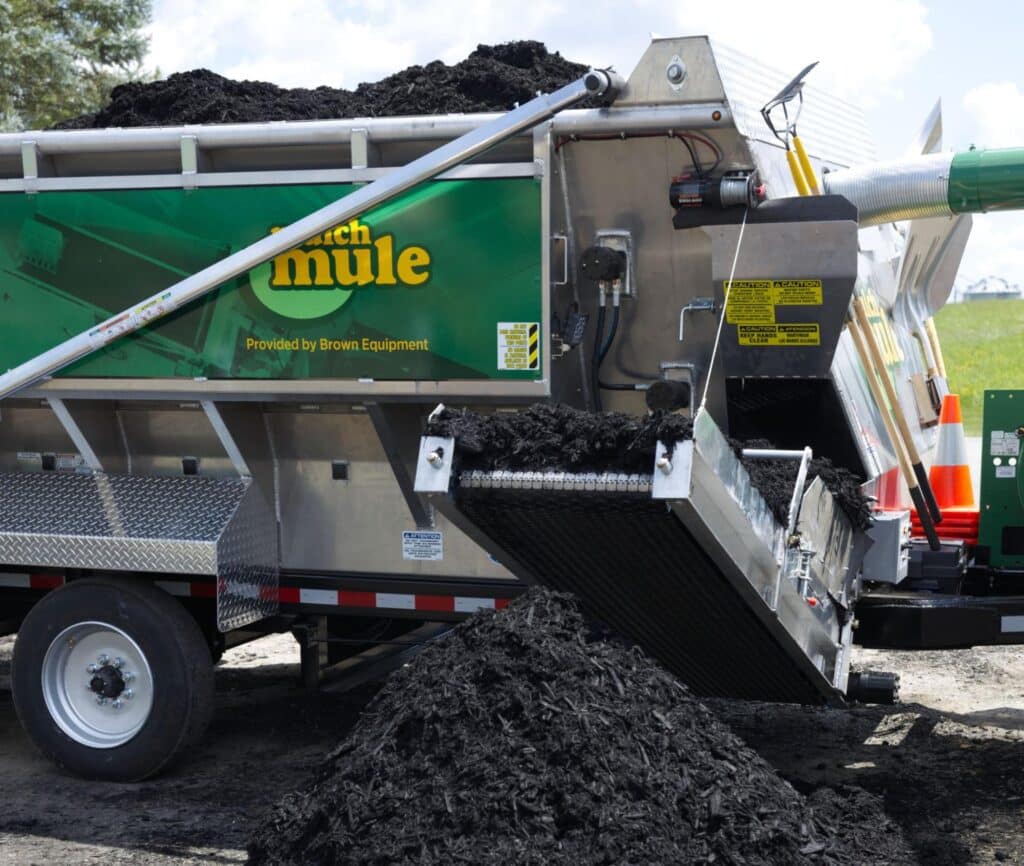
Upgrading to a Mulch Mule delivers the strongest return when your crews adopt it quickly and you consistently track labor savings on real jobs.
Train for Fast Adoption and Safe Operation
The faster crews feel confident using the Mulch Mule, the sooner you see a return:
- Short on-site orientation: Walk teams through loading procedures, live floor controls, and safe discharge before the first live job.
- Demonstrate real scenarios: Practice partial unloads, tight planting beds, and controlled discharge near hardscapes so crews see how to protect customer property.
- Name equipment leads: Assign one or two “Mulch Mule champions” to oversee inspections, hitching, and operation, reducing misuse and downtime.
Track Labor Metrics to Document Your Savings
Simple tracking turns “we think it’s faster” into hard ROI:
- Set a baseline: Before using the Mulch Mule, record labor hours, crew size, and overtime for a few standard mulch jobs (e.g., 10–15 yards).
- Measure after implementation: Track the same metrics once the Mulch Mule is in regular use—hours per job, yards moved per day, overtime, and any injury incidents tied to manual hauling.
- Compare and adjust: Use a basic spreadsheet or job-costing tool to compare pre‑ and post‑upgrade numbers. If certain crews or job types aren’t seeing savings, refine training, routing, or how you stage material.
Mulch Mule vs. Hiring More Labor: Financial and Crew Impact
When growing demand stretches your crews thin, it’s worth asking whether hiring more people or investing in a Mulch Mule will deliver better long-term results for both your budget and your team.
Control Long-Term Labor Costs
Adding another crew member increases your fixed yearly costs—wages, payroll taxes, benefits, workers’ comp, and ongoing recruiting/training. Those expenses persist whether your schedule is full or not. A Mulch Mule is a one-time capital investment that boosts the output of the people you already have.
Illustrative annual cost comparison (example only):
| Expense Category | Additional Crew Member (Est.) | Mulch Mule Trailer (Est.) |
| Wages & Payroll Taxes | $42,000–$60,000 | — |
| Recruiting & Training | $2,000+ | — |
| Workers’ Comp & Insurance | $4,000+ | $900–$1,500 (added coverage) |
| Equipment & PPE for Employee | $1,000+ | $500–$1,000 (maintenance) |
| Total Annual Cost | $49,000–$67,000+ | $2,000–$2,500 (upkeep only) |
In this hypothetical scenario, the pattern is clear: a Mulch Mule can often reduce the need to add a full-time laborer for hauling tasks, freeing that budget for strategic hires while still increasing job capacity and reducing overtime. To understand your own numbers, plug in your actual wage ranges, insurance rates, and maintenance costs.
Support Crew Safety and Satisfaction
There’s also a human side to this decision. Relying on shovels, wheelbarrows, and repeated heavy lifting to move mulch and debris can quickly lead to fatigue, strains, and overexertion injuries—especially during peak season. Those injuries cost money, but they also sideline experienced workers and add stress to the rest of the team.
By taking on the heaviest, most repetitive hauling work, the Mulch Mule helps your crews:
- Spend less time on exhausting manual tasks and more on skilled, higher-value work.
- Experience less day-to-day physical wear, supporting longer, more sustainable careers.
- Work on better-organized jobsites where material is delivered precisely where and when it’s needed.
Used thoughtfully, the Mulch Mule doesn’t replace your people—it protects them and allows your business to get more done with the talent you already trust, reducing both direct injury costs and the hidden expenses of burnout and turnover.
FAQ: Mulch Mule ROI & Buying Questions
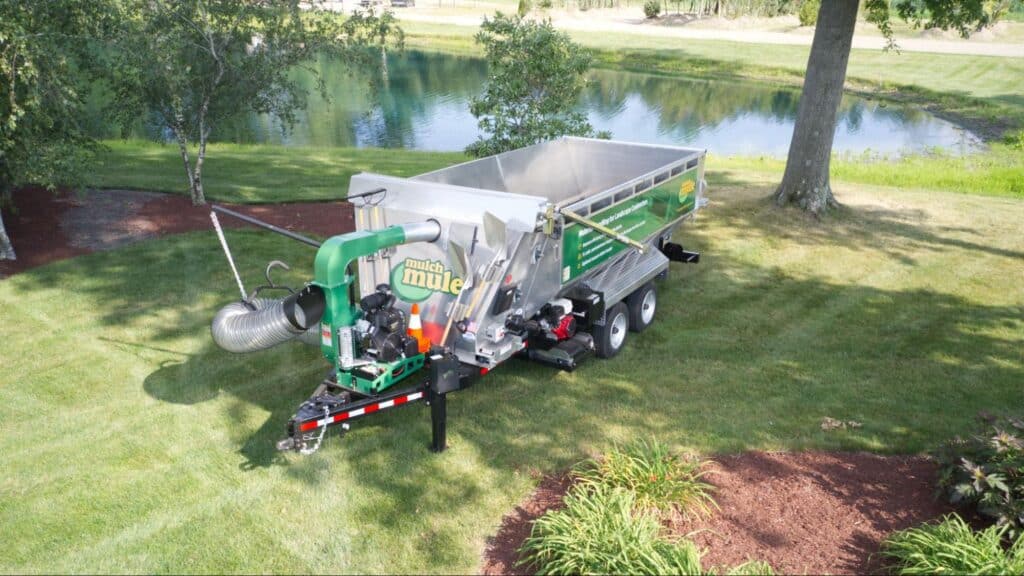
Is a Mulch Mule worth it for smaller landscaping companies?
Yes. Smaller companies often run lean crews, so labor saved on hauling has an outsized impact. A Mulch Mule can let a 2–3 person crew handle work that used to require 4–5 people, or finish jobs earlier and take on extra projects, helping you grow revenue without immediately expanding headcount.
Do I need to be doing huge commercial jobs to justify the cost?
Not necessarily. The Mulch Mule creates value anywhere you’re moving repetitive bulk materials—even on mid-sized residential routes. If you regularly spread mulch, soil, or stone and find crews spending hours shoveling or making multiple trips, those minutes and miles add up quickly over a full season.
Can a Mulch Mule reduce my workers’ comp and injury-related costs?
It can help. By shifting the heaviest, most repetitive lifting and hauling to a mechanized live floor, you reduce exposure to overexertion and musculoskeletal injuries, which are major drivers of costly workers’ comp claims and lost-time incidents in landscaping. Lower injury frequency over time can support more stable insurance and fewer schedule disruptions.
Will the Mulch Mule replace the need to hire more people?
In many cases, it can delay or reduce the need to add a full-time laborer purely for hauling tasks. Instead of growing your crew count, you increase the output of each existing crew. That said, the trailer is best viewed as a force-multiplier: it won’t replace skilled people, but it will let them spend more time on billable, higher-value work.
What should I track to confirm I’m getting a good ROI?
Start with a simple before-and-after comparison on standard jobs:
- Labor hours per job and per cubic yard moved
- Overtime hours related to material handling
- Number of jobs completed per week
- Injury or near-miss incidents tied to manual hauling
If those numbers improve after deploying the Mulch Mule, you have documented proof of ROI—not just a gut feeling.
Turn Labor Savings into a Competitive Edge
Upgrading to a Mulch Mule is more than a convenience—it’s a way to permanently reshape how your business spends its most expensive resource: crew time. By reducing repetitive shoveling and wheelbarrow trips with a live-floor trailer system, you can cut hours from every bulk-material job, reduce overtime, lower exposure to overexertion injuries, and free your team to focus on higher-value work. When you train crews for fast, safe adoption, and track labor metrics before and after implementation, the payback period often measures in seasons, not years.
If you’re ready to see how this could work in your operation, start by reviewing a few recent mulch or debris jobs and estimating your potential labor savings using the examples in this article. Then take the next step and schedule a live demo through the Mulch Mule Ambassador Program to watch the trailer in action and get ROI questions answered for your specific routes, crews, and markets.