Selecting the right material handling trailer can elevate your landscaping or contracting operations. Size a material handling trailer based on payload weight—not just cubic yards—to keep jobs running smoothly, reduce overloading risk, and stay compliant with weight regulations. This guide walks you through calculating payload weight, decoding trailer ratings, choosing the right axle configuration, and verifying truck compatibility. By adopting a numbers-driven strategy, you can minimize risks, enhance safety, and improve cost-effectiveness.
Why “Cubic Yards” Alone Won’t Suffice: Common Sizing Errors
Relying solely on cubic yards to determine trailer size often leads to miscalculations. While it measures volume, it does not account for factors like material density and moisture content.
Confusing Volume with Weight
Cubic yards indicate capacity but not load weight. For example, a cubic yard of mulch might weigh 500–700 pounds, whereas the same volume of gravel can exceed 3,000 pounds. Misjudging these differences can lead to overloading and safety hazards.
The Impact of Moisture
Materials such as soil and mulch absorb water, significantly increasing their weight. A dry cubic yard of mulch might weigh 500 pounds, but wet conditions can push that to 700–800 pounds. Failing to account for these fluctuations can cause you to exceed trailer capacity and truck towing limits.
Your Truck’s Role
Even a perfectly sized trailer is ineffective if your truck cannot safely tow it. Your truck’s payload, towing capacity, and Gross Combined Weight Rating (GCWR) must be factored into your trailer selection. Overloading your truck can result in mechanical strain and compromised safety.
Step-by-Step Sizing Workflow
Accurately sizing your trailer requires evaluating your workload, material weights, and equipment limitations. The following steps ensure your trailer meets operational and safety requirements.
Step 1: Assess Your Project Needs
Determine:
- Primary Materials: Identify what you transport (mulch, gravel, soil, etc.) since densities vary.
- Job Volume: Estimate the average volume per project.
- Additional Equipment: Include any tools or extra cargo you typically haul. Consider attachments and upgrades that may affect total weight.
- Seasonal Variations: Consider changes in material weight due to weather conditions.
Step 2: Convert Volume to Payload Weight
Translate your material volume into weight:
- Formula: Volume (cubic yards) × Weight per cubic yard = Total payload weight
- For example, 8 cubic yards of mulch at 600 pounds per yard equals 4,800 pounds.
- Safety Margin: Add 10–20% to accommodate moisture and unforeseen weight increases. So 4,800 pounds becomes about 5,500 pounds.
Material Weight Cheat Sheet (Typical Ranges)
Use these as starting points, then confirm with your supplier—moisture content and local material blends can change weights significantly.
| Material | Typical lbs per cubic yard (approx.) |
| Mulch (dry to wet) | 500–800 |
| Compost | 900–1,500 |
| Topsoil (dry to wet) | 1,800–2,700 |
| Sand | 2,600–3,200 |
| Gravel / crushed stone | 2,600–3,300 |
Tip: When in doubt, size for the heaviest likely scenario (wet material, denser aggregate) and keep your 10–20% safety margin.
Step 3: Determine Trailer Requirements and GVWR
Match your payload to trailer specifications:
- Payload Capacity: Subtract the trailer’s curb weight from its GVWR to find how much cargo it can safely carry.
- Select a Trailer: Choose one whose GVWR comfortably exceeds your total expected load (cargo plus trailer weight). This buffer helps you plan for future needs.
Step 4: Account for Other Key Factors
Ensure your trailer supports overall safety and functionality:
- Load Distribution: An even distribution of materials promotes stable towing.
- Truck Compatibility: Verify your truck’s towing capacity, GCWR, and hitch class can handle the trailer’s loaded weight.
Decoding Trailer Ratings: GVWR, GAWR, GVW
Understanding trailer ratings is vital for safe operation.
Key Terms Explained
- GVWR (Gross Vehicle Weight Rating): The maximum total weight a trailer can safely carry, including its own weight.
- GAWR (Gross Axle Weight Rating): The maximum weight a single axle can support. Distributing weight across axles is crucial.
- GVW (Gross Vehicle Weight): The combined weight of the trailer plus its cargo, varying with each load.
Practical Application
- Stay Below GVWR: Always select a trailer whose GVWR exceeds your total payload by a safe margin.
- Balance Axle Loads: Avoid straining a single axle by spreading weight evenly.
- Monitor GVW: Check actual load weights, especially after conditions such as rain that add moisture.
Also be sure that the axles, tires, and brakes meet appropriate brake requirements for your maximum load.
Axle Configuration: Single, Tandem, or Triple?
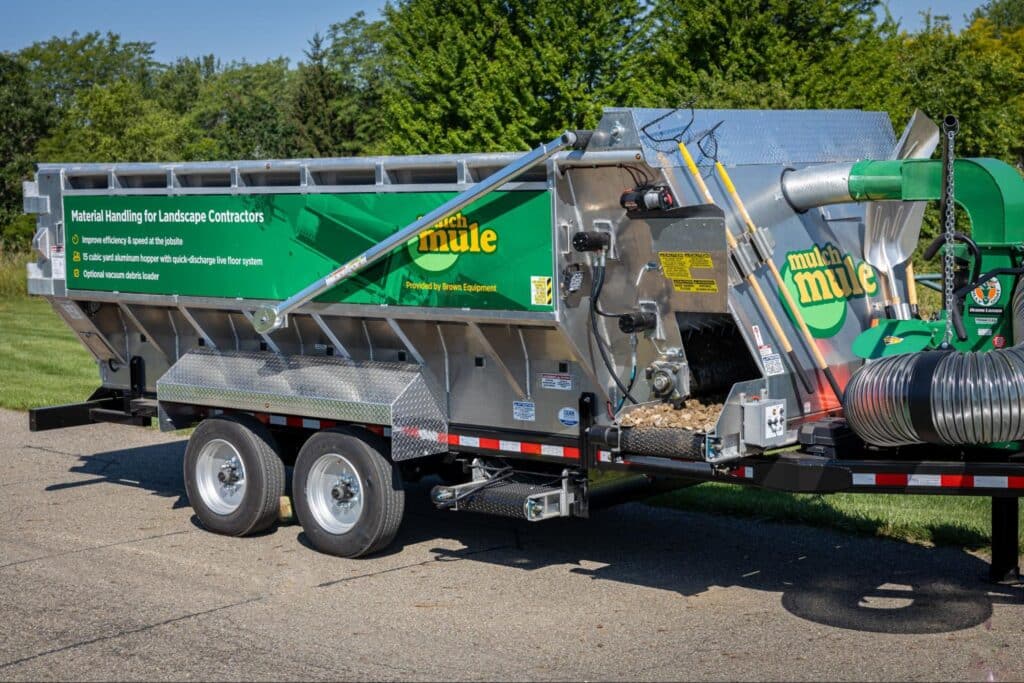
Your axle choice affects capacity, stability, and maintenance efforts.
Single Axle
- Advantages: Lower cost, easier maneuverability, improved fuel efficiency.
- Drawbacks: Limited capacity and stability at higher speeds.
Tandem Axle
- Advantages: Increased capacity and stability with better load distribution.
- Drawbacks: Higher cost and heavier empty weight.
Triple Axle
- Advantages: Highest payload capacity and balanced weight distribution.
- Drawbacks: Greater maintenance, elevated cost, and reduced maneuverability.
Brake Requirements and Load Placement
Aim for 10–15% tongue weight, keeping heavier loads toward the front of the trailer. Use a properly rated hitch to ensure it can handle the expected load.
Where to Find Your Truck and Trailer Ratings
Before you buy a trailer—or load one—verify ratings from the original sources.
- Truck payload rating: driver-side door jamb sticker (often listed as “Tire and Loading Information”).
- Tow rating & GCWR: owner’s manual or manufacturer tow guide for your exact engine/axle/cab configuration.
- Trailer GVWR & GAWR: trailer VIN/data plate (commonly on the tongue or front frame).
- Hitch rating: label/stamp on the receiver hitch and the ball mount (both must be rated for the load).
Matching the Trailer to Your Truck
A trailer’s specifications must align with your truck’s capabilities.
Key Truck Specifications
- Payload Capacity: The total weight your truck can safely carry, including the trailer’s tongue weight.
- Tow Rating: The maximum loaded weight the truck can tow.
- Hitch Rating: Verify your hitch’s classification can support your loaded trailer.
Hitch and Tongue Weight Considerations
- Tongue Weight Calculator: Aim for 10–15% of the loaded trailer’s weight on the hitch to maintain stable towing.
Quick Compatibility Checklist
- Confirm your truck’s towing capacity, payload, and GCWR in the owner’s manual.
- Verify that your trailer’s GVWR is within the truck’s allowable limits.
- Calculate the tongue weight to ensure it remains under your truck’s rating.
- Retain a 10–15% buffer for unexpected situations.
Sizing Scenarios: Real-World Examples
Residential Mulch
- Volume: 8 cubic yards of mulch at 600 pounds each ˜ 4,800 pounds.
- Trailer: A GVWR of around 7,000 pounds, leaving room for the trailer’s weight and any moisture increases.
Soil
- Volume: 4 cubic yards of topsoil at 1,800 pounds (dry), up to 2,700 pounds (wet) ˜ 7,200–10,800 pounds.
- Trailer: A 14,000–16,000 pound GVWR trailer is recommended to account for moisture variation, safety margin, and the trailer’s empty weight.
Gravel
- Volume: 3 cubic yards at 2,800 pounds each ˜ 8,400 pounds.
- Trailer: A 12,000-pound GVWR or higher (tandem or triple axle) is recommended to handle heavy loads safely.
Mixed Loads
- Combined material estimates: About 3,000 pounds total.
- Trailer: GVWR in the 6,000–7,000 pound range, ensuring adequate capacity and a safety buffer.
For operations handling multiple material types year-round, learn how automating bulk material handling can streamline your workflow and reduce labor costs.
Quick Sizing Checklist
Use this checklist before buying or upgrading your trailer:
10-Point Pre-Purchase Checklist
- Identify Materials: Note the types and typical weights per cubic yard.
- Account for Moisture: Add 10–20% for a safety margin.
- Calculate Total Payload: Multiply volume by weight per cubic yard.
- Know Your Trailer’s Curb Weight: Include the trailer’s empty weight in calculations.
- Verify Trailer’s GVWR: Choose a trailer whose GVWR exceeds your payload.
- Confirm Axle and Brake Ratings: Ensure all components support the load.
- Calculate Tongue Weight: Aim for 10–15% of total load at the hitch.
- Evaluate Truck Ratings: Check tow rating, payload, and GCWR.
- Choose the Right Hitch: Match the hitch class to your loaded weight.
- Plan for Future Growth: Factor in potential increases in capacity needs. Building a scalable business model means investing in equipment that grows with your operation.
Key Numbers to Bring to the Dealer
- Material types and average weights per cubic yard.
- Typical and maximum volumes you plan to haul.
- Your truck’s published tow rating, payload, and GCWR.
- Desired safety margin for load and tongue weight.
Frequently Asked Questions
How do I size a material handling trailer correctly?
To size a material handling trailer, estimate your heaviest typical load by weight, add a 10–20% buffer for moisture/variability, then choose a trailer whose payload capacity (GVWR minus empty trailer weight) comfortably covers that number.
Where do I find my trailer’s GVWR and axle ratings?
Look for the trailer’s VIN/data plate (often on the tongue or front frame) for GVWR and GAWR, and verify your tires and wheels have load ratings that meet or exceed those numbers.
How can I manage variability when hauling different materials?
Size for the densest/heaviest material you expect to haul (often gravel or wet soil), not the lightest. If you’re unsure, weigh a “typical” load once at a public scale and use that as your baseline.
What if my current trailer is undersized?
Reduce load size and increase trips to stay within ratings—overloading quickly damages tires, axles, bearings, and brakes. If you’re routinely close to the limit, upgrading is usually the safest and most cost-effective fix long-term.
Is axle spacing important?
Yes—proper spacing improves weight distribution and towing stability while reducing uneven tire and suspension wear. It also helps the trailer track better when loaded near capacity.
Is overloading acceptable for short distances?
No—short trips still stress tires, hubs, axles, brakes, and your truck’s drivetrain, and can create liability if something fails. If you must move material short-range, reduce the load and secure it properly.
How do I know if my truck can handle the trailer?
Confirm three things: your truck’s tow rating, payload (which must include tongue weight), and GCWR. If any one of those is exceeded at your expected loaded weight, you need a smaller load, a different trailer, or a different truck.
How much tongue weight should I aim for?
A good target is 10–15% of the loaded trailer weight on the hitch for stable towing. Too little tongue weight can cause sway; too much can overload your rear axle and reduce steering/braking control.
Do I need trailer brakes or a brake controller?
Brake requirements vary by state and trailer weight, but for heavier loads, trailer brakes (and a properly set brake controller) are a major safety upgrade. Always match braking capacity to your maximum expected loaded weight.
Do I need a CDL for heavy trailers?
It depends on your combined truck and trailer weight. According to the Federal Motor Carrier Safety Administration (FMCSA), a CDL is generally required if the GCWR exceeds 26,001 pounds and the trailer’s GVWR exceeds 10,000 pounds. The FMCSA clarifies that a driver of a combination vehicle with a GCWR of less than 26,001 pounds is not required to obtain a CDL, even if the trailer’s GVWR is more than 10,000 pounds. Because requirements can vary by state and by vehicle configuration (including trailer type and endorsements), confirm the rule with your state DOT/DMV for your exact setup.
Mastering Trailer Sizing for Safe and Efficient Material Handling
Sizing a material handling trailer involves more than measuring cubic yards. It means carefully calculating payload weight, verifying trailer ratings, and confirming compatibility with your truck. By factoring in moisture, load distribution, and proper curb weight, you can achieve a safe, efficient setup. Confirm that your trailer’s GVWR aligns with your truck’s towing capacity and ensure adequate tongue weight for stability. Distribute your load evenly, and factor in future growth as your business evolves.
Investing in the right equipment can transform your landscaping productivity while keeping your crew safer and more efficient. Ready to enhance your material handling efficiency? Contact Mulch Mule today to see how we can help you achieve smarter, safer, and more profitable hauling.