Not every bulk material behaves the same on a continuous conveyor belt. Some materials flow freely and discharge in seconds. Others compact during transit, bridge inside the hopper, or create excessive wear on belt surfaces. If you’re running a live floor trailer for your landscaping or contracting operation, understanding how different materials move through your system is the difference between smooth job sites and costly delays.
This guide breaks down the most common live floor trailer materials by flowability, bridging risk, abrasion potential, and real-world best practices. Whether you’re hauling mulch, gravel, sand, or compost, you’ll walk away knowing what to expect and how to prepare.
Key Takeaways
Here are the essentials for choosing and preparing materials for live floor trailer systems:
- Mulch and bark are ideal live floor materials thanks to their light weight, consistent texture, and natural flowability on conveyor belt systems.
- Sand and gravel flow easily but are abrasive. Expect faster belt wear compared to organic materials, and plan maintenance accordingly.
- Wet or compacted soil is the most common bridging culprit. Moisture content is the single biggest variable affecting material behavior in any live floor system.
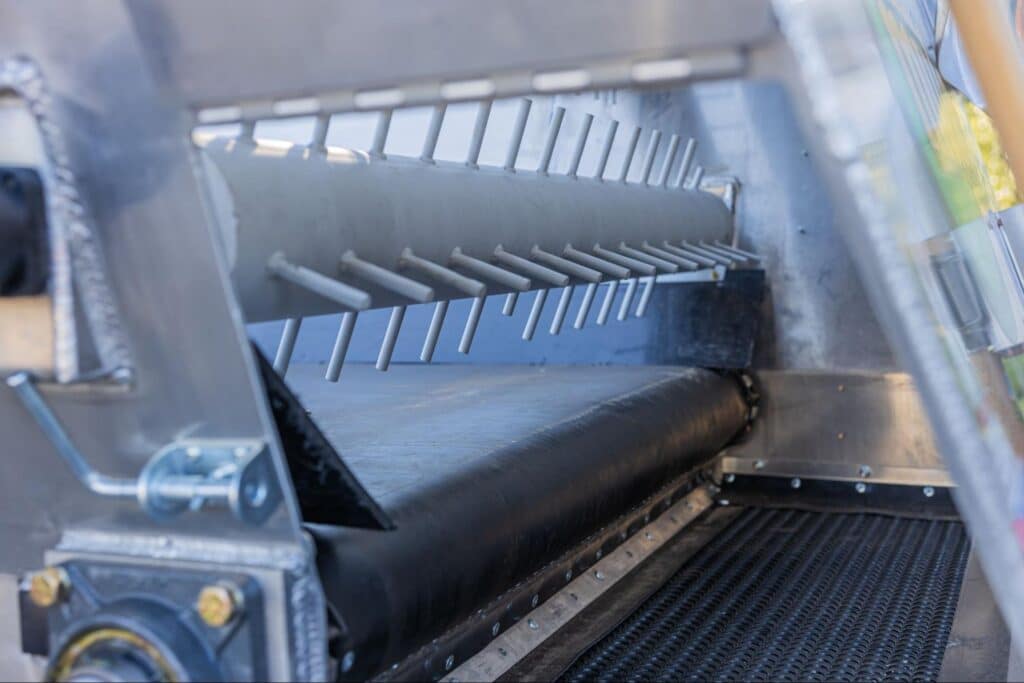
- Conditioning features matter. Tine bars and reversible belt direction help break up compacted loads and keep material moving. The Mulch Mule includes both as standard features.
- Material prep starts at the yard, not at the job site. How material is loaded, how long it sits, and its moisture level all affect discharge performance.
How Live Floor Trailer Systems Handle Different Materials
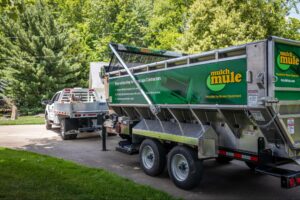
A live floor trailer uses a powered floor system to move material horizontally out of the hopper, either through a curbside chute or rear discharge. Unlike dump trailers that rely on gravity and tipping, a continuous, reversible conveyor belt gives operators precise control over discharge speed and direction.
That precision matters because not all materials respond the same way to belt movement. Three properties determine how a material will perform in your trailer:
- Flowability: How easily the material moves across the belt surface. Free-flowing materials like dry sand discharge quickly. Cohesive materials like wet clay resist movement and can stall.
- Bridging risk: The tendency for material to compact or arch across the hopper, supporting its own weight instead of flowing to the belt. Wet soil and densely packed compost are common offenders.
- Abrasion potential: How much wear the material inflicts on the belt and hopper walls. Crushed stone and coarse gravel create significantly more friction than mulch or leaves.
Understanding these three factors for your most-hauled materials helps you load smarter, discharge faster, and extend the life of your equipment.
Live Floor Trailer Materials: A Material-by-Material Breakdown
Mulch
Mulch is the bread and butter of most live floor trailer operations in landscaping, and for good reason. Shredded hardwood, dyed mulch, and natural bark mulch all have excellent flowability on conveyor belt systems. The fibrous texture grips the belt surface well, and the relatively low density (typically 400–800 lbs per cubic yard depending on type and moisture) means less stress on the drive system.
Double-shredded mulch is the easiest to work with. Triple-shredded material is denser, heavier when wet, and more prone to compaction during transit. If you’re hauling triple-shredded on a hot day after it’s been sitting in a pile, expect it to compress more in the hopper. This is where conditioning tine bars earn their keep, breaking up compacted material before it reaches the discharge point.
“It’s really helped us out in a lot of beneficial ways to where we can do 100–150 yards of mulch with a five six man crew a day.” — Trace’s Lawn Care, Mulch Mule customer
Soil and Topsoil
Soil is where moisture content becomes the critical variable. Dry, screened topsoil flows smoothly and discharges predictably. Wet soil is a different story. Moisture increases cohesion between particles, which raises what engineers call the angle of repose—the steepest angle material can hold without sliding. In practical terms, wet soil clumps, sticks to hopper walls, and can bridge across the width of the trailer.
When hauling soil, try to load from well-drained stockpiles. If the material has been rained on recently, expect slower discharge speeds and more frequent use of the belt’s reverse function to break up jams. The Mulch Mule’s conditioning tine bars are specifically designed for this scenario, agitating compacted material so it feeds to the belt consistently.
Gravel and Crushed Stone
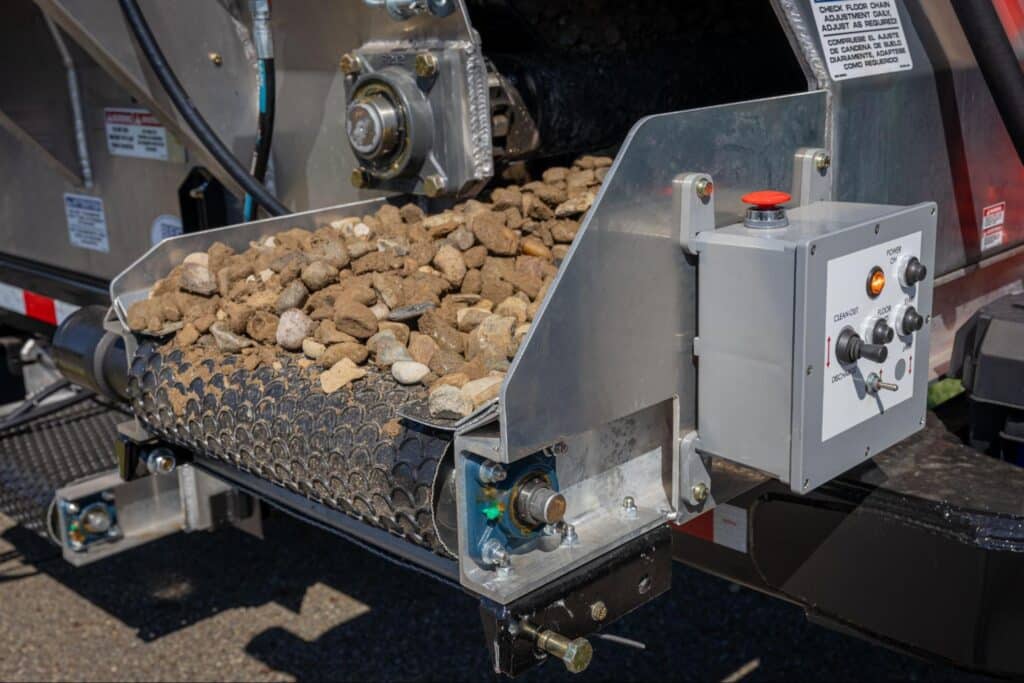
Gravel is dense, free-flowing, and tough on equipment. Angular crushed stone (¾” or smaller) moves reliably on a continuous conveyor belt because the particles don’t interlock enough to bridge. Rounded pea gravel flows even more easily. The challenge with aggregate isn’t flow—it’s abrasion. Stone-on-belt contact generates more friction and wear than organic materials.
Gravel also weighs significantly more than mulch or soil. A 15 cu yd hopper full of gravel can weigh 20,000+ lbs, compared to roughly 6,000–12,000 lbs for mulch depending on moisture. Always check your tow vehicle’s capacity and the trailer’s GVWR before loading aggregate to full volume. In most cases, you’ll hit your weight limit well before you fill the hopper.
Sand
Dry sand is one of the easiest materials to discharge from a live floor system. The fine, uniform particles have a low angle of repose (typically 30–35° when dry) and flow almost like a liquid across the belt. Wet sand is heavier and slightly more cohesive, but it rarely bridges in well-designed hopper systems.
The main consideration with sand is weight and abrasion. Like gravel, sand is dense (approximately 2,500–3,000 lbs per cubic yard) and abrasive at the particle level. Fine silica sand can work its way into seams and moving parts over time, so cleaning the belt and hopper after sand loads is good preventive maintenance.
Compost
Compost varies widely depending on its source and stage of decomposition. Well-screened, finished compost handles like lightweight soil and flows predictably. Partially decomposed or unscreened compost can include chunks of woody material, and its higher moisture content increases bridging risk.
If your operation regularly hauls compost, ask your supplier about screening and moisture levels. Compost that has been turned recently and allowed to drain will perform far better in a live floor system than material pulled from the bottom of a wet pile.
Bark
Bark nuggets and shredded bark share many characteristics with mulch and are equally well-suited to live floor trailer systems. Bark nuggets, being bulkier and less fibrous, can leave air gaps in the load that reduce overall payload density. Shredded bark compacts more tightly and flows well. Neither type presents significant bridging or abrasion concerns.
Leaves and Yard Debris
For operations using a leaf vacuum attachment like the optional 37HP Billy Goat kit, leaves are among the lightest and most forgiving materials for a live floor system. Dry leaves weigh very little per cubic yard and flow freely. Wet, matted leaves can compress and slow discharge slightly, but they rarely cause true bridging. The bigger challenge with leaves is volume—you’ll fill the hopper well before you approach any weight limits.
Moisture: The Variable That Changes Everything
Across every material type, moisture content is the single most important factor affecting discharge performance. Dry material flows. Wet material clumps. This isn’t unique to live floor systems; it’s a fundamental property of how bulk granular materials behave. According to the National Association of Landscape Professionals, musculoskeletal injuries from lifting, carrying, and pushing heavy loads are the most common and expensive occupational health problem facing landscape crews. Equipment that reduces hands-on handling—especially with heavy, wet materials—directly supports crew safety.
Practical steps to manage moisture-related issues:
- Load from the top of the stockpile when possible. Material near the surface has had more time to drain.
- Don’t let wet material sit in the hopper overnight. Moisture migrates to the belt surface and hopper walls, increasing adhesion and making the first discharge of the day sluggish.
- Use the automatic tarp system to keep rain off during transit. A tarp won’t dry out wet material, but it prevents the problem from getting worse between the yard and the job site.
- Run the belt in reverse briefly before full discharge. A few seconds of reverse belt movement can loosen material that has settled against the discharge opening during transit.
When a Live Floor Trailer Isn’t the Right Fit
Live floor trailers handle an impressive range of materials, but they’re not the best tool for every load. Extremely heavy, oversized rock (large rip-rap, boulders, or demolition debris with rebar) can damage the belt and hopper. If the majority of your work involves loads where individual pieces exceed 6–10 inches, a dump trailer or heavy equipment may be more appropriate.
Similarly, liquid slurries and extremely saturated materials (think soup-consistency concrete wash or waterlogged silt) aren’t suited for conveyor belt discharge. The system is designed for bulk solids that hold their shape, not materials that flow like a fluid. For the bulk materials listed above—mulch, soil, gravel, sand, compost, bark, and leaves—a live floor trailer is one of the most efficient material handling systems available to landscaping and contracting operations.
Frequently Asked Questions About Live Floor Trailer Materials
Can you put gravel in a live floor trailer?
Yes. Gravel and crushed stone flow reliably on a continuous conveyor belt. The main considerations are weight (gravel is dense, so check your GVWR before loading to full volume) and abrasion (aggregate materials create more belt wear than organic materials like mulch). Standard maintenance intervals may need to be shortened for operations that primarily haul stone.
What causes material to bridge inside a live floor trailer?
Bridging occurs when material compacts tightly enough to support its own weight across the width of the hopper, preventing it from reaching the belt. High moisture content is the most common cause. Cohesive materials like wet soil and unscreened compost are the most prone to bridging. Features like conditioning tine bars and a reversible belt help break up bridged material without manual intervention.
Is wet mulch harder to discharge than dry mulch?
Moderately. Wet mulch is heavier and slightly more compacted, which can slow discharge speed compared to dry material. However, mulch rarely bridges even when wet because its fibrous structure prevents the kind of cohesive compaction that causes true bridging in soil or clay. You may need to increase belt speed or run a short reverse cycle, but wet mulch is still very manageable.
How does sand affect belt wear on a conveyor trailer?
Sand is abrasive at the particle level, and fine grains can work into seams and moving parts over time. Cleaning the belt and hopper after sand loads is important preventive maintenance. That said, sand’s excellent flowability means it discharges quickly and doesn’t create the kind of high-friction, stuck-material scenarios that are hardest on equipment. Regular inspections and a consistent maintenance schedule keep sand-related wear manageable.
What materials should you avoid putting in a live floor trailer?
Oversized rock and demolition debris with rebar or sharp metal edges can damage the belt. Liquid slurries and saturated materials that flow like a fluid aren’t suited for conveyor discharge. For standard landscaping and contracting materials—mulch, soil, gravel, sand, compost, bark, and leaves—live floor trailers perform well.
Match the Right Material Handling to Your Operation
Every material you load tells you something about how your next discharge will go. Mulch and bark flow clean with minimal wear. Sand and gravel move fast but demand more from your belt. Soil and compost depend almost entirely on moisture and prep. Knowing these differences before you pull onto a job site means fewer delays, less manual intervention, and longer equipment life.
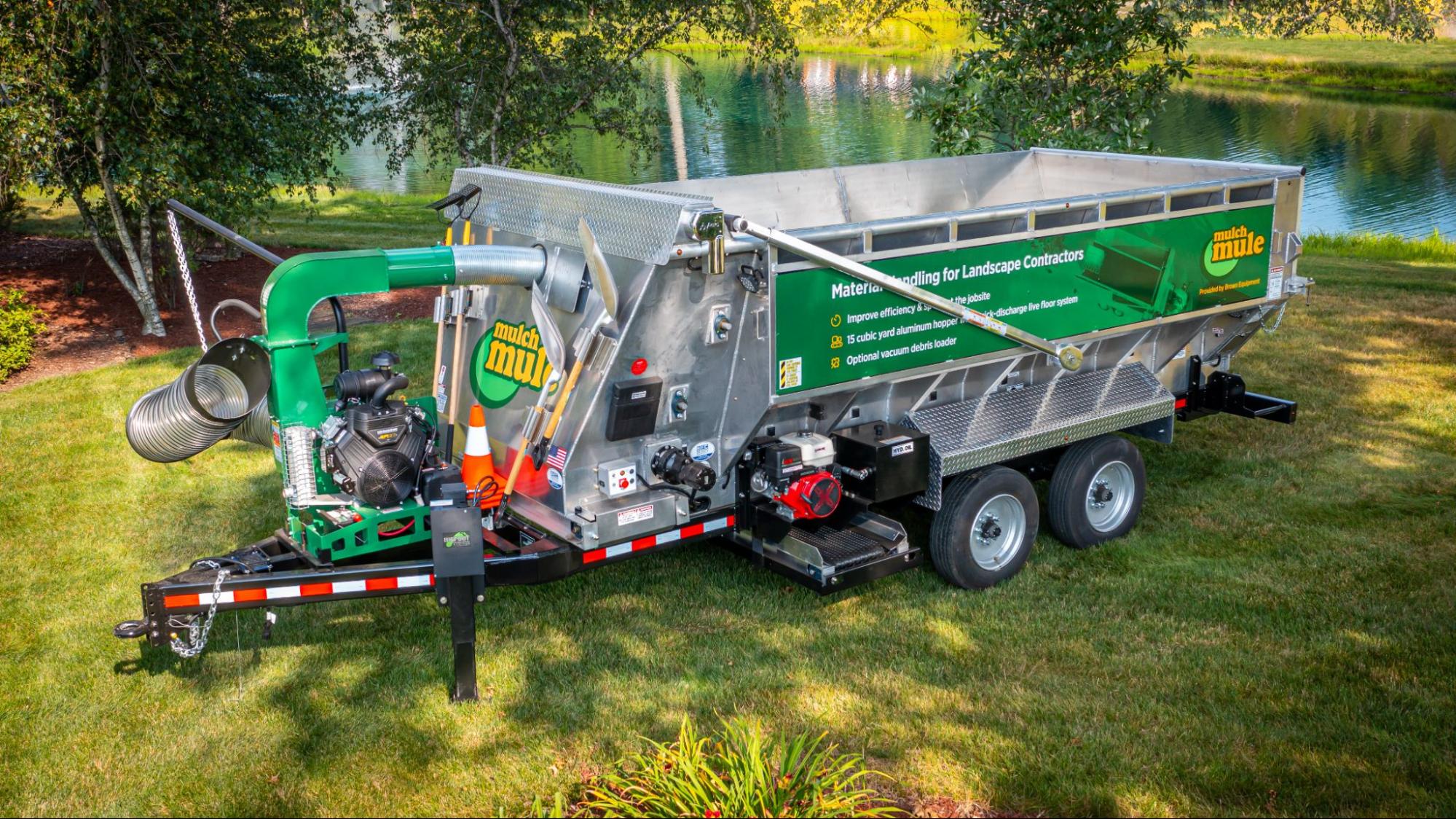
The Mulch Mule’s continuous, reversible conveyor belt, conditioning tine bars, and 15 cu yd aluminum hopper are built for exactly this range of materials. Ready to see how it handles your most common loads? Request a quote or connect with an ambassador in your area for a live demonstration.